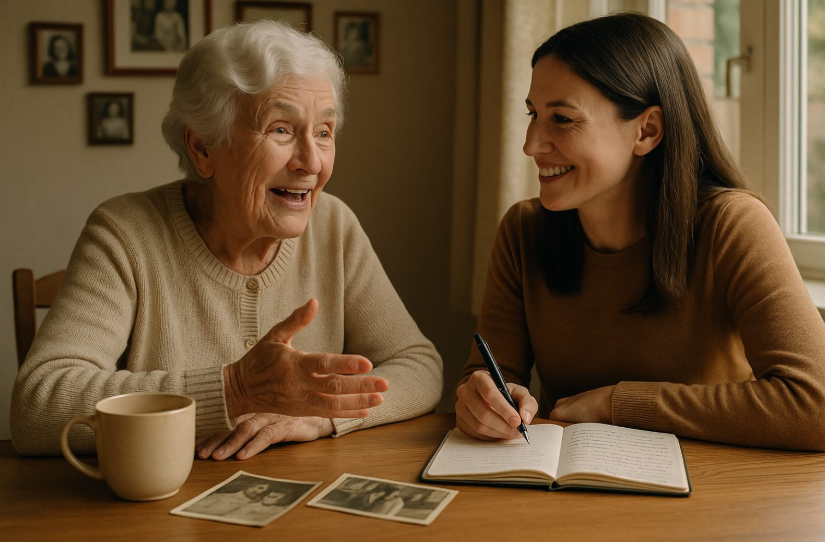
There was a time when family stories lived around the dinner table.
They showed up in the pauses between bites of food, in the laughter that followed a familiar punchline, in the quiet reverence of remembering someone who wasn’t there anymore. Stories weren’t documented, they were passed down. And somehow, that felt enough.
But today, things move faster. Families are spread across cities, countries, and time zones. Conversations happen in text threads. Photo albums sit in cloud storage instead of on coffee tables. And if we’re not intentional, memories can quietly disappear.
That’s why preserving family stories matters more than ever. Not just for nostalgia but for identity, connection, and legacy.
The Stories That Shape Who We Are
Family stories do more than entertain. They give context to our lives.
When you hear about how your grandparents built a life from scratch, how your parents navigated setbacks, or how your siblings saw the same childhood differently, you gain perspective. You understand where your values came from. You see resilience in action. You recognize patterns of love, humor, and even mistakes.
Psychologists have found that children who know their family history tend to have higher emotional resilience. Why? Because they see themselves as part of something bigger. They understand that struggles are temporary and that their family has faced hard seasons before.
Stories anchor us.
But they only work if they’re remembered.
Why Memories Fade Faster Today
In theory, we document more than ever. Our phones are filled with thousands of photos. We record videos constantly. We post milestones online.
Yet documentation is not the same as preservation.
Digital clutter can bury meaningful moments. A hard drive crash, a forgotten password, or simply the overwhelm of too many files can make important memories inaccessible. Without intention, even the most beautiful photos become lost in a sea of data.
That’s why turning digital fragments into something tangible matters. Tools like a collage maker allow families to curate their favorite images into visual stories not just random snapshots, but thoughtfully arranged narratives that reflect shared experiences. When photos are organized into albums, prints, or creative layouts, they regain emotional weight.
Preservation isn’t about storing everything. It’s about selecting what matters.
Stories Build Stronger Family Bonds
Have you ever noticed how telling an old story brings people closer?
When siblings laugh about a childhood mishap, when parents revisit their early struggles, when grandparents recount a moment of courage something shifts. The story becomes a shared space.
In families where members live far apart, storytelling becomes even more powerful. A recorded video interview with a grandparent. A printed photo book from a recent reunion. A digital archive organized by year.
These aren’t just keepsakes. They are bridges.
And in a world where attention is constantly pulled elsewhere, bridges are priceless.
Preserving Stories Is Preserving Identity
We often underestimate how much we learn from looking back.
A daughter reading about her mother’s career challenges may find courage to pursue her own ambitions. A son discovering letters written during difficult times may understand vulnerability differently. A grandchild seeing photos from a migration journey may gain pride in their roots.
Family stories offer more than entertainment they offer guidance.
They remind us:
- Where we came from
- What we’ve overcome
- What we value
- Who we love
Without these reminders, identity can feel fragmented.
With them, it feels grounded.
See also: Which Is the Best Luxury Property Agency in Dubai?
Practical Ways to Preserve Family Stories
You don’t need a publishing deal or a professional historian to protect your family’s legacy. You just need intention.
Here are practical, realistic ways to begin:
1. Start Recording Conversations
Sit down with parents or grandparents and ask simple questions:
- What was your childhood like?
- What was your first job?
- What was the hardest season of your life?
- What are you most proud of?
Record audio or video on your phone. These conversations become priceless over time.
2. Organize Photos with Purpose
Instead of keeping thousands of scattered images, choose key moments from each year. Create themed collections vacations, holidays, milestones.
Curated visuals tell clearer stories than endless scrolling.
3. Create Physical Keepsakes
Digital storage is convenient, but physical items endure in a different way. Printed photo books, framed collages, handwritten letters these objects invite interaction. They sit on shelves, not servers.
4. Write Short Memory Essays
You don’t have to write a full autobiography. A one-page reflection about a family tradition or a meaningful trip is enough. Over time, those pages become a personal archive.
5. Make It Collaborative
Invite siblings, cousins, and relatives to contribute their memories. Everyone remembers events differently. Combining perspectives creates a fuller, richer narrative.
The Emotional Value Grows Over Time
The importance of preserving stories often becomes clearest when it’s almost too late.
After a loved one passes, people search for recordings of their voice. They treasure handwritten notes. They revisit old photos again and again.
What once felt ordinary becomes extraordinary.
By preserving stories now, we spare our future selves regret. We create something future generations can hold onto not just facts, but feelings.
In the Age of Speed, Choose Intention
We live in a time defined by speed. Fast communication. Fast consumption. Fast forgetting.
Preserving family stories is an act of slowing down.
It’s choosing to pause and ask questions. To organize instead of accumulate. To create meaning instead of noise.
The goal isn’t perfection. It’s presence.
Because one day, someone will want to know what life was like right now how you laughed, what you valued, what you overcame, what you loved.
When that day comes, your stories will matter more than ever.
And the time to protect them is today.