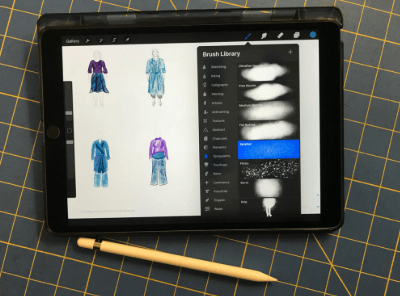
For a fashion designer, the pencil sketch is the purest form of an idea. It is the moment where inspiration first meets the page. However, for decades, that sketch was just the beginning of a long, expensive, and often frustrating technical journey. Translating a 2D line drawing into a 3D physical garment usually required weeks of pattern drafting and multiple rounds of sampling. Today, that gap is being bridged by technology. With Image-from-Line capabilities, designers can now transform their raw sketches into realistic digital garments almost instantly.
The Problem with Traditional Translation
The traditional “sketch-to-sample” workflow is plagued by “interpretation loss.” A designer draws a specific fold or a unique silhouette, but by the time the pattern maker and the sewing team have finished the first prototype, the original essence is often diluted. This happens because 2D drawings lack the depth, physics, and material data required for high-fidelity production.
Modern AI-driven tools have solved this by creating a direct link between the artist’s hand and the 3D world. Instead of a “suggestion,” your line drawing becomes a literal blueprint that the AI uses to construct a digital twin.
How “Image-from-Line” Works Its Magic
The process of turning a sketch into a 3D reality is powered by advanced neural networks that understand the geometry of clothing.
1. Recognizing Structural Cues
When you upload a line drawing, the AI doesn’t just see pixels; it sees construction. It identifies where the shoulder seams are, how the collar is structured, and where the hemline falls. This “intelligent recognition” allows the system to build a 3D mesh that perfectly mirrors your original proportions.
2. Instant Texturization and Depth
Once the 3D form is established, the technology adds depth. It interprets the “flat” lines of your sketch as three-dimensional folds and drapes. You can then instantly apply digital textiles—seeing how your drawing looks in heavy denim, lightweight chiffon, or structured leather.
3. Real-Time Aesthetic Refinement
Because the conversion is instantaneous, designers can iterate on the fly. If the 3D version of your sketch shows that a pocket placement is awkward or a lapel is too wide, you can adjust your line drawing and re-generate the model in seconds. This “live feedback loop” is the ultimate tool for creative perfection.
Why This is a Game-Changer for Modern Brands
The ability to move from sketch to 3D reality instantly provides a massive competitive edge in the fast-paced 2026 fashion market:
- Zero-Cost Prototyping: You can “test” a hundred sketches in a single day without wasting a single yard of fabric. This allows for a level of creative exploration that was previously impossible.
- Speed to Market: Trends move at the speed of social media. Brands that can visualize and approve designs digitally within hours—rather than weeks—are the ones that will win the race to the consumer.
- Enhanced Communication: Showing a buyer a flat sketch is one thing; showing them a 360-degree, photorealistic 3D garment based on that sketch is another. It builds immediate trust and speeds up the wholesale approval process.
See also: Affordable CCTV Cameras and Installation for Homes & Offices
Sustainability: The End of Over-Sampling
The environmental impact of fashion is a global concern, and sampling is a major part of the problem. By utilizing “Image-from-Line” technology, brands can significantly reduce their reliance on physical prototypes. Every design that is perfected in the digital realm is a design that doesn’t contribute to textile waste, chemical runoff from dyeing, or the carbon footprint of international sample shipping.
Empowering the Next Generation of Designers
This technology democratizes the industry. A designer no longer needs a massive technical team or high-end 3D modeling skills to see their ideas in 3D. If you can draw a line, you can create a digital garment. This allows independent labels and solo creators to compete with global fashion houses by giving them the same high-tech capabilities at their fingertips.
Conclusion
The evolution from sketch to 3D reality represents the ultimate modernization of the design studio. By leveraging Image-from-Line technology, fashion professionals are reclaiming their time and their creative integrity.
We are moving away from an era of “guessing” what a sketch will look like and into an era of “knowing.” The distance between a pencil and a pixel has never been shorter, and for the fashion industry, the results are more efficient, sustainable, and beautiful than ever before. Your next collection is just a few lines away from becoming a digital reality.