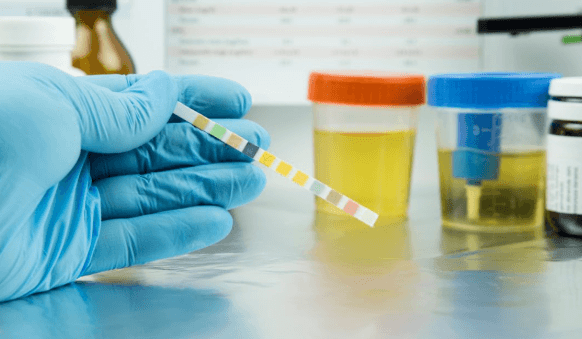
Drug screening programs at small and mid-sized businesses usually fail for the same reason. The HR director, fresh from a compliance training in March, sets up a screening protocol in April, runs it tightly through the summer, then watches it drift through Q4 because the kits are inconsistent, the supplier keeps changing prices, and the lab turnaround keeps slipping past the 72-hour window where a positive result is actually useful.
I have watched this cycle play out at three different companies in the last 18 months. The pattern is identical every time.
Whether your business is required to run drug screening (DOT-regulated transportation, federal contractors, safety-sensitive manufacturing) or chooses to (general workplace policy, post-incident testing, pre-employment due diligence), the operational side is the part that breaks first. Not the policy. Not the legal framework. The supply chain.
Two things make a screening program survive its first year. The first is supplier reliability, meaning you can order Tuesday morning and have CLIA-waived kits in your office by Thursday without paying expedited shipping every single time. The second is panel consistency, meaning the same substances are being tested across every employee in every period. Switching panel formats mid-year creates legal exposure and tends to flag during a Department of Labor audit that you’d rather not have to explain.
This is why a supplier like 12 Panel Now tends to show up as the operational backbone for compliance officers running multi-site programs. The product line covers the standard panels (5, 10, 12, and custom configurations) at price points that don’t move much month to month, which is the kind of stability you need when your annual screening budget needs to actually match the year’s costs.
A 12-panel screen, for reference, covers amphetamines, barbiturates, benzodiazepines, buprenorphine, cocaine, ecstasy (MDMA), methadone, methamphetamine, opiates, oxycodone, phencyclidine (PCP), and THC. Some configurations swap one of those out for fentanyl, which has become non-negotiable for any safety-sensitive role in the last three years given the prevalence in counterfeit pills.
A few things that tend to derail screening programs and how to avoid them:
Chain-of-custody documentation. Every kit needs to ship with chain-of-custody forms that hold up legally. If the form gets lost, the test result usually cannot be used in a termination or disciplinary action. Spend the small premium on kits that include integrated COC forms rather than separate paperwork.
Cut-off levels. The federal SAMHSA cut-offs are the default for most regulated industries, but workplace policies often want lower cut-offs to catch occasional use. Make sure the supplier’s panels match the cut-off thresholds your policy requires. A kit calibrated to the wrong cut-off is functionally useless for your purposes.
See also: Need Bookkeeping Services for Small Business? Read This!
Storage and expiration. Drug screening kits have shelf lives in the 12 to 24 month range depending on the manufacturer. Bulk-ordering for a 50-person workforce is fine. Bulk-ordering for a 5-person team usually means kits expiring on the shelf. Match order volume to actual testing cadence.
Post-incident protocol. The window for post-incident testing is tight. DOT-regulated positions require testing within 8 hours of an incident. For non-regulated workplaces, most legal counsel will recommend the same 8-hour window as a defensible standard. Which means you need kits on-site, not in a warehouse three days away. This is the single biggest argument for keeping a working inventory at every operational location, even small ones.
MRO review. Any non-negative test result needs to go to a Medical Review Officer who can rule out legitimate prescription explanations. Cheap programs skip the MRO step. Programs that survive a legal challenge do not. Budget for it.
For most businesses adding a screening program for the first time, the first three months are the noisy period. New hires take time to adjust. Existing employees get nervous. False positives happen at a measurable rate (around 5 to 10 percent depending on the panel, almost all of which get cleared by the MRO review). The program looks more chaotic than it is. By month four, the cadence settles, the documentation gets clean, and the policy becomes background noise rather than a weekly fire.
The mistake I see most often: companies treating drug screening as a one-off legal compliance task rather than an ongoing operational discipline. The ones that get it right run it the way they run payroll. Same vendor. Same protocol. Same documentation flow. Every month. For years. That is what makes a workplace screening program actually do its job.