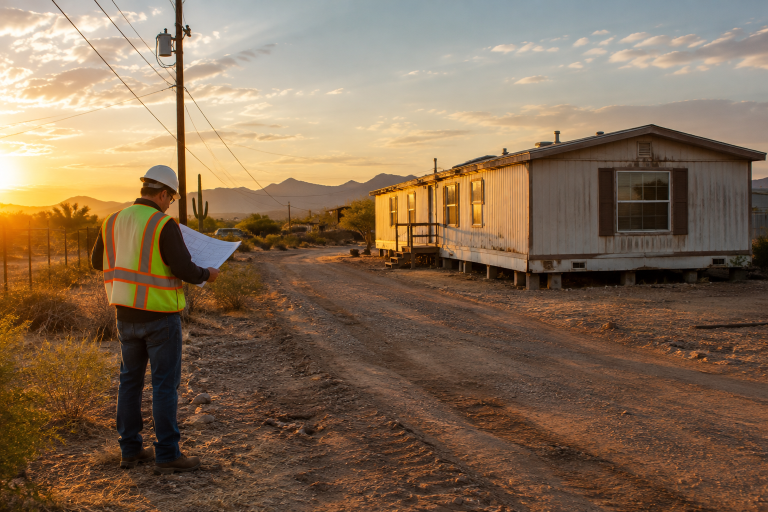
Removing a mobile home is rarely as simple as arranging a truck and clearing a driveway. Whether the property is in a Phoenix-area neighborhood, a Tucson mobile home park, a high-country community near Flagstaff, or a rural desert parcel, early planning can help prevent delays, unsafe conditions, and unexpected cleanup work. Property owners preparing for this type of project can begin by understanding the typical scope of Arizona Mobile Home Removal services and the site-specific details that affect the job.
A removal plan should account for ownership records, local approvals, utility shutoffs, equipment access, attached structures, debris handling, and the condition of the lot after the home is gone. The right sequence matters because a problem with a single item, such as a live utility connection or a blocked access route, can delay the entire project.
Why Planning Matters Before Mobile Home Removal
Mobile home removal may involve hauling an intact home, dismantling it for disposal, or demolishing a structure that cannot be safely moved. Each option can require different equipment, labor, permits, and cleanup steps. Arizona conditions can add practical challenges, including narrow park lanes, unpaved rural roads, heat, monsoon-season drainage, overhead lines, and loose desert soil.
A rural lot with a wash crossing and limited turning space needs a different plan than a home in a managed park with established access rules. For a practical starting point on local removal planning, property owners may review the service information at azmobilehomeremoval.com before requesting estimates.
See also: Regain Control of Your Life With Drug Addiction Treatment
Confirm Property and Home Status
Collect basic details before calling contractors. Confirm whether the home is located on privately owned land or on a rented space in a mobile home park. Identify who owns the home, the land, and any sheds, carports, decks, skirting, or room additions.
- Locate the title, registration, purchase documents, and prior permit records if available.
- Record the approximate age, size, and layout of the home.
- Note whether it is a single-wide, double-wide, manufactured home, or older mobile home.
- Take photos of the interior, exterior, foundation, additions, driveway, and access route.
- Point out visible damage, soft flooring, roof problems, pest activity, or unstable attachments.
Check Permits and Local Requirements
Permit responsibilities can come from a city, county, park, or state agency, depending on the work and location. Ask the local building or planning office whether removal, demolition, site clearance, utility, or final inspection requirements apply. The Arizona Department of Housing explains that its installation permit process may involve either the department or the local authority having jurisdiction.
- Ask whether a separate permit is needed for demolition, moving, grading, or utility work.
- Confirm how a septic system, private well, concrete pad, anchors, or foundation must be addressed.
- Request written confirmation of required inspections and utility disconnections.
- Keep permits, receipts, approvals, photos, and inspection notes with the property records.
Review Mobile Home Park Rules
Park residents should read the lease and speak with management before scheduling removal. Arizona law requires written notice of intent to remove a mobile home from a park, and it requires written clearance from the landlord before the home is removed. The current Arizona Revised Statutes also address responsibility for accessory structures, debris, personal property, and restoration of the space.
- Ask for the park’s required timeline, contractor rules, and restoration standards.
- Confirm responsibility for decks, steps, awnings, sheds, carports, and skirting.
- Resolve unpaid rent or other amounts due that may affect written clearance.
- Get park instructions in writing, including any required deposit or bond.
Arrange Utility Disconnections
Electricity, gas, water, sewer, propane, cable, and internet connections should be addressed before removal work begins. Contact each provider early, identify private lines and tanks, and ask who will disconnect, cap, or secure each connection. Active utilities should be handled by the provider or a properly qualified professional, not cut or moved by the property owner.
Prepare Site Access
Access conditions affect both safety and cost. Measure gates, driveways, sharp turns, bridges, and clearance beneath branches or overhead wires. Remove parked vehicles, loose materials, and stored items from the route. Mark known septic tanks, irrigation lines, private water lines, and underground cables, then tell the crew about slopes, soft ground, drainage channels, or recent storm damage.
Handle Belongings, Debris, and Hazardous Materials
Empty the home before work starts. Remove documents, medication, valuables, tools, family items, and anything intended for reuse. Ask in advance how appliances, furniture, tires, scrap metal, and household debris will be handled. If there are suspected hazardous materials, leaking chemicals, severe mold, or an unsafe ceiling or floor, avoid disturbing the area and disclose the condition before scheduling the work.
Build a Clear Budget
A written estimate should define the work rather than provide only a starting price. Compare the complete scope of each proposal, including permits, labor, equipment, hauling, disposal, additions, utility coordination, and final cleanup. Ask whether the lot will be swept, graded, or left with a pad, anchors, utility stubs, or other items that require separate work.
Prepare for Removal Day
- The crew reviews the property, access route, and approved scope of work.
- Utility disconnections and site safety conditions are checked.
- Loose property and removable attachments are addressed.
- The home is dismantled, loaded, lifted, or hauled using the planned method.
- Materials are separated for reuse, recycling, or disposal as applicable.
- The work area is checked for sharp metal, glass, exposed anchors, debris, and open lines.
Complete the Final Check
Walk the lot before the crew leaves. Confirm that utility connections are safely closed or capped, debris has been removed as agreed, and no holes, exposed hardware, or damaged fencing have been overlooked. Request project photos and disposal documentation when available. If a final inspection is required, arrange it promptly and save the resulting records for future construction, sale, or insurance needs.
Frequently Asked Questions
Do all Arizona mobile home removals need the same permits?
No. Requirements can differ by jurisdiction, property type, and whether the home is being moved, dismantled, or demolished. Confirm requirements with the authority responsible for the property location.
Can a home be removed from a park without written approval?
Park removal can require written clearance and compliance with the lease, park rules, and space-restoration requirements. Obtain written direction from management before work begins.
Who should disconnect utilities?
Utility providers or qualified professionals should handle active electric, gas, water, sewer, and propane connections.
What if the home is unsafe to enter?
Do not enter an unstable structure. Share exterior photos and any known concerns so qualified professionals can determine a safer approach to inspection and removal.
Final Thoughts
A careful Arizona mobile home removal checklist turns a complicated project into a manageable sequence of decisions. Confirm ownership, permits, park rules, utilities, access, cleanup expectations, and final inspection needs before equipment arrives. With the details handled early, the cleared property can be left in a safer, better-prepared state for its next use.