Table of Contents
- AI Integration in Emergency Response
- Next Generation 911 (NG911)
- Smart Devices and Wearables
- Deployable Communication Assets
- Software Platforms for Coordination
- Challenges and Considerations
- Conclusion
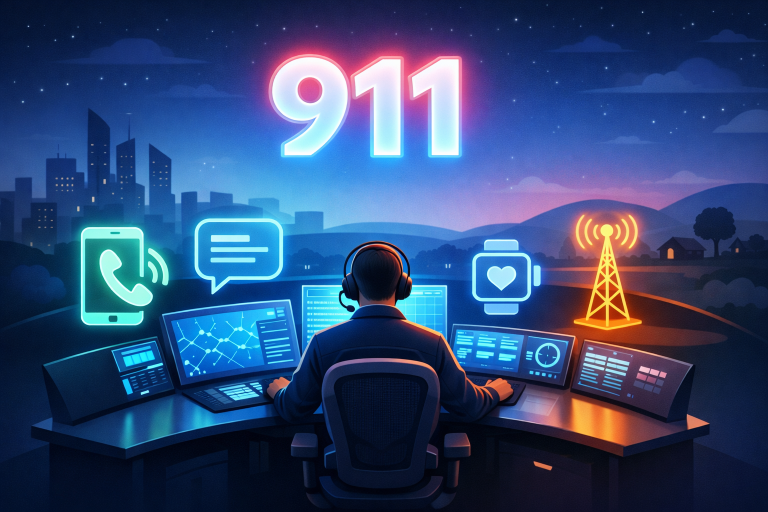
Emergency response systems are undergoing a technological revolution, leading to faster and more accurate responses during crises. The use of artificial intelligence, modern communication tools, and advanced software ensures that first responders can reach those in need with unprecedented efficiency. Rapid innovation is driving smarter, more integrated emergency services, and both public agencies and private sector partners are playing an important role in this transformation. To see a real-world solution to faster emergency processing, learn more about automated dispatch integrations currently in operation.
These changes are also making it easier for citizens to interact with 911 centers and receive help even when they cannot make a phone call. Innovations like Next Generation 911, smart devices, and deployable communication tools are ensuring that communities remain protected regardless of circumstances. As this technology continues to evolve, emergency response systems are poised to become more adaptive and tailored to the safety needs of the population.
The upgrades to emergency response systems have far-reaching effects, not just in large cities but also in rural communities and disaster-prone regions. Because technology is playing such a crucial role, these advancements are regularly featured in respected news outlets, including The Associated Press, which has highlighted the impact of digital advancements on 911 centers.
AI Integration in Emergency Response
Artificial intelligence (AI) is drastically enhancing how emergency calls and incidents are managed. Modern platforms use AI to process large volumes of caller data, quickly identify urgent situations, and provide insights that help operators prioritize responses. For example, solutions like Motorola Solutions’ Vesta NXT analyze incoming data to help dispatchers make better decisions in real time. By evaluating voice, text, and other input data, these platforms can spot patterns and even predict emerging threats, supporting first responders with actionable information during critical situations. This technology is also helping call handlers reduce human error and dispatch assistance faster than manual systems alone could allow.
Next Generation 911 (NG911)
Next Generation 911 (NG911) represents a fundamental shift in emergency communication. Unlike traditional 911 systems, which rely on voice calls, NG911 supports a broad range of modern communication methods, including texting, video, and multimedia message sharing. This expanded capability gives dispatchers vital context during emergencies, especially when callers may not be able to speak safely. Several jurisdictions, such as Collier County in Florida, have deployed NG911, allowing residents to send photos and video directly from the scene. This not only improves situational awareness for emergency personnel but often results in faster and more precise assistance for those affected.
Smart Devices and Wearables
Wearable health monitors and smart devices are transforming emergency communication for millions of people. Many smartwatches feature fall detection and heart rate monitoring and can automatically alert emergency services when a critical incident is detected. Smart speakers and voice-activated home assistants can also trigger emergency responses for users unable to reach a phone. These innovations are particularly valuable for elderly individuals or those living alone, ensuring that medical help is always just a moment away. However, this surge in automated calls means dispatchers and emergency call centers must adapt protocols and train staff to distinguish between real emergencies and accidental triggers, balancing responsiveness with efficiency.
Deployable Communication Assets
During major disasters like hurricanes or earthquakes, traditional phone lines and cell networks often fail. Deployable communication assets bridge this gap by delivering reliable connectivity for emergency teams anywhere it is needed. Solutions include portable cell towers, mobile communication trailers, drones, and even off-road vehicles equipped with satellite internet. Companies such as Verizon have invested heavily in these technologies to restore communications within hours, not days, after infrastructure damage. With these assets, first responders can coordinate rescue operations, access real-time data, and remain in constant communication with public safety officials, even in isolated locations.
Software Platforms for Coordination
The increasing complexity of emergencies demands seamless collaboration across agencies and jurisdictions. Advanced software platforms like the Next-Generation Incident Command System (NICS) provide unified command and communication tools during multi-agency operations. These systems allow police, fire departments, EMS providers, and other responders to share maps, situation updates, and resource status instantly. This results in more precise and effective responses in fast-moving crisis situations. NICS and similar platforms embody the kind of innovation the public sector needs in order to manage large events, natural disasters, and cross-jurisdiction emergencies efficiently. The Department of Homeland Security has emphasized the need for these technologies in its guidance to U.S. emergency managers.
Challenges and Considerations
As technology becomes central to emergency response, new challenges arise. Integrating AI, smart devices, and advanced communications into the legacy 911 system requires significant investment in infrastructure and workforce training. Data privacy and cybersecurity are critical, as sensitive information about emergencies and individuals must be protected at every step. There is also the risk of over-reliance on digital tools. If networks go down or systems are compromised, agencies need to have fail-safes and backup plans ready to maintain critical operations. Finally, ongoing evaluation and community feedback will be needed to ensure that technology serves all populations equitably.
Conclusion
Technology is fundamentally altering the landscape of emergency response, creating safer, faster, and more connected communities. With AI-driven analytics, multimedia 911, smart wearables, deployable communications, and advanced coordination platforms, first responders are equipped to save more lives and mitigate disasters more effectively than ever before. Continuing to address security, privacy, and training challenges will be crucial for public trust and optimal performance. The future of emergency response will be one where innovation and community protection go hand in hand.