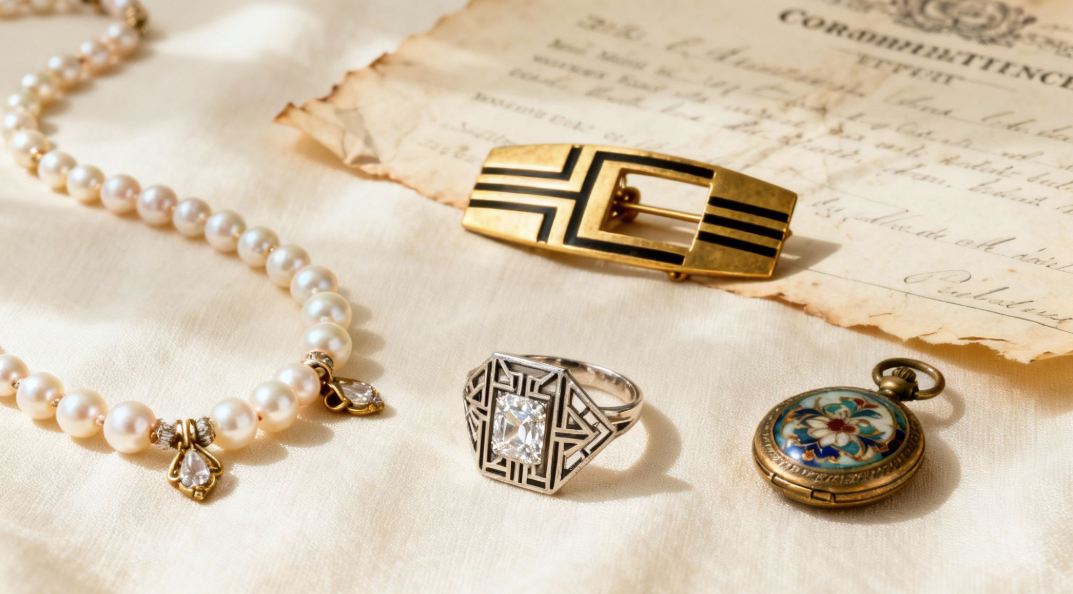
There is something deeply personal about the jewelry we choose to wear or the pieces we choose to give. Unlike most purchases, a ring, a necklace, or a watch does not simply occupy a drawer or a shelf. It lives on the body, close to the skin, close to the pulse. It marks occasions we never want to forget, and in some cases, it outlives the people who wore it first.
Yet navigating the world of fine jewelry and quality timepieces can feel overwhelming. The vocabulary alone, carats, pavé, complications, movements can make even a confident buyer feel like a tourist without a map. The purpose of this guide is not to sell you anything, but to help you think more clearly about what to look for, what questions to ask, and why certain choices tend to hold their meaning far better than others.
Why Jewelry Carries Weight Beyond Its Materials
Ask anyone who has inherited a piece of jewelry what makes it valuable, and they will rarely mention gold prices or gemstone clarity. They will tell you about a grandmother who wore a brooch every Sunday, or a father who never took off his wedding band. The material worth of a piece is almost an afterthought compared to the story it carries.
This is not just sentiment. It is why well-made jewelry pieces crafted with attention to proportion, finish, and durability tend to become heirlooms, while cheaply made alternatives fall apart or fall out of fashion. The connection between quality and longevity is not incidental. A piece that holds together physically is more likely to hold together emotionally across generations.
This is particularly evident when you look at jewelry traditions across Northern Europe. Countries like Finland have long maintained a culture of restraint in design favoring pieces that are clean, considered, and made to last rather than to impress on first glance. This sensibility has produced some of the most enduring approaches to contemporary jewelry, where less is genuinely more.
Understanding What Goes Into a Quality Ring
Rings are perhaps the most freighted category in all of jewelry. They mark status, commemorate relationships, and often accompany a person through decades of life. Choosing one well, therefore, requires thinking beyond the immediate visual appeal.
The metal is the foundation. Gold, whether yellow, white, or rose remains the classic choice for its malleability, resistance to tarnish, and warmth against the skin. But alternatives like titanium and ceramic have earned a genuine place in contemporary ring-making. Titanium is extraordinarily light and hypoallergenic, making it comfortable for people who find heavier metals uncomfortable. Ceramic rings, a relatively modern option, offer striking visual depth and remarkable scratch resistance, though they require care around hard impacts.
Then there is the question of stones. For many people, a diamond remains the default centerpiece and for good reason. Its hardness makes it exceptionally practical for everyday wear, which matters enormously for a piece that will be worn continuously. But the conversation around diamonds has shifted in recent years. Lab-grown diamonds, which are chemically and physically identical to mined stones, have become a serious and increasingly popular option. They offer comparable optical quality at a significantly different price point, and many buyers appreciate that their origins are traceable and transparent.
The decision between a mined and lab-grown stone is ultimately a personal one, shaped by values, aesthetics, and budget. Neither is objectively superior, but both deserve to be chosen consciously rather than by default.
Choosing a Ring That Will Still Feel Right in Twenty Years
One of the more underappreciated factors in choosing any significant piece of jewelry is the question of timelessness. What looks striking in a particular moment does not always age well. Trends in jewelry, as in everything else, cycle through and a piece you selected because it felt current can feel dated surprisingly quickly.
The most enduring pieces tend to have several things in common: they are proportioned appropriately to the wearer’s hand and lifestyle, they prioritize quality of construction over visual complexity, and they have a certain quietness to them that allows the wearer’s personality to come through rather than competing with it.
An engagement ring, for instance, is not merely a declaration at the moment it is given. It is a piece that will be worn daily for a lifetime through seasons, careers, children, and changes. That context demands something more thoughtful than a passing impulse. Retailers who carry a serious selection of engagement rings typically understand this, offering options in a range of metals, settings, and stone types so the buyer can find something that genuinely fits the person receiving it.
It is also worth thinking about the relationship between engagement and wedding rings as a set. Some couples choose to coordinate them deliberately matching metals, complementary profiles. Others prefer contrast. Neither approach is wrong, but it is worth considering before either piece is purchased.
The Case for a Well-Made Watch
Watches occupy a different space in the landscape of personal adornment. They are at once functional and expressive tools that also happen to say something about the person wearing them. In a world where most people check the time on a phone, choosing to wear a watch is already a kind of statement: that some things are worth doing with intention and craft.
The watchmaking tradition in Switzerland has long set the standard by which mechanical and quartz movements are judged. Swiss brands have earned their reputation not through marketing alone, but through accumulated decades of precision engineering and quality control. What distinguishes a well-regarded Swiss watch from a lower-tier timepiece is not always visible to the naked eye; it lives in the movement, in the tolerances held during manufacturing, and in the consistency with which the watch performs over years and decades of wear.
Among brands with genuine heritage and widespread recognition, Tissot stands as a particularly interesting case. Founded in 1853 in Le Locle, Switzerland, the brand has maintained a consistent position at the intersection of accessibility and genuine Swiss quality. Its watches are not entry-level novelties, nor are they beyond the reach of most buyers, a space in the market that is harder to occupy well than it might appear.
What Tissot has managed to build, across collections ranging from classic dress watches to sport-oriented pieces, is a coherent identity rooted in reliability. For a first serious watch, for a professional milestone gift, or for someone rebuilding a collection around pieces that will actually be worn, the brand’s offerings merit genuine consideration.
What to Look for in a Watch, Regardless of Brand
Knowing that a watch is Swiss-made is a useful context, but it is not the end of the conversation. Within any respected brand, there is a range of quality, and choosing well requires paying attention to a few specific things.
The movement type matters. Quartz movements are accurate, low-maintenance, and rarely require servicing. Mechanical movements whether hand-wound or automatic demand more from the owner but offer a different kind of relationship with time. The slight variation in a mechanical watch’s rate, the necessity of winding or wearing it regularly to keep it running: these are not flaws but features, if you find that sort of tactile connection appealing.
Case material and finish are next. Stainless steel is the workhouse of watchmaking: durable, resistant to corrosion, and versatile enough for both formal and casual wear. The finishing on the case, whether polished, brushed, or a combination, affects both the visual character of the watch and how well it hides light scratches over time.
Water resistance is another consideration often overlooked until it becomes relevant. A watch worn daily will encounter rain, handwashing, and occasional splashes. Understanding what your watch can handle and what it cannot will determine whether it remains a companion for life or requires an expensive repair after an encounter with a kitchen sink.
Buying Jewelry and Watches Online: A Measured Perspective
A decade ago, the idea of buying fine jewelry or a serious watch online would have struck many people as reckless. Today, with high-resolution photography, detailed product information, and customer review ecosystems that have become genuinely reliable, the picture has changed considerably.
Retailers like Laatukoru which operates across both European and Finnish markets represent a new kind of jewelry presence: one that combines a serious product range (spanning rings, necklaces, earrings, bracelets, and watches) with the transparency and accessibility of online retail. The breadth of their catalog, which includes everything from diamond and gold pieces to more contemporary materials like titanium and lab-grown stones, reflects a genuine effort to serve a wide range of buyers rather than a narrow luxury niche.
For buyers approaching this space for the first time, a few principles apply regardless of where you choose to shop. Look for detailed product specifications rather than vague descriptors. Understand the return and sizing policies before purchasing anything that fits against the body. And pay attention to customer reviews, not just the star rating, but the substance of what people describe. A pattern of comments about quality, packaging care, and responsive service tells you more than any brand statement could.
The Gift Question: Jewelry for Someone Else
Buying jewelry for yourself involves a kind of sovereignty: you know your own taste, your own lifestyle, the kinds of things you reach for in a drawer. Buying it for someone else is a genuinely different challenge, and one that requires a different kind of attention.
The most reliable guide is observation. What does the person already wear? If their existing jewelry is predominantly silver-toned, a gold piece however beautiful may never find its way out of the box. If they favor simple, unadorned designs, an elaborate statement piece may feel like a mismatch with their identity.
For milestone gifts, anniversaries, significant birthdays, celebrations of achievement the investment in something lasting tends to be the right call. A piece chosen thoughtfully, from a source with genuine credentials, communicates something that a hastily chosen item simply cannot. The care in the selection becomes part of the gift itself.
A watch, particularly, makes an excellent gift for someone entering a new chapter. Starting a career, completing a degree, marking a decade these are occasions that benefit from a gift that will be worn, noticed, and connected to the moment for years afterward.
See also: Regain Control of Your Life With Drug Addiction Treatment
Caring for What You Own
The longevity of any piece of jewelry or a quality watch depends not only on how it was made but on how it is maintained. This is an aspect of ownership that is often underemphasized at the point of purchase but becomes increasingly relevant over time.
Gold jewelry benefits from periodic gentle cleaning with warm water and mild soap, and from being stored separately to avoid scratches from contact with harder materials. Diamonds, despite their hardness, accumulate oils and residue from daily wear and should be cleaned regularly to maintain their brilliance. Pearl pieces require particular care; they are organic in origin, relatively soft compared to gemstones, and are vulnerable to perfumes, chemicals, and even perspiration over prolonged contact.
Watches, if mechanical, should be serviced periodically typically every three to five years for a piece worn regularly. Quartz watches require far less intervention, though battery replacement and occasional case cleaning will extend both the life of the timepiece and its appearance. Storing watches away from strong magnets which can affect the accuracy of many movements is another simple precaution worth observing.
Closing Thoughts: Choosing With Care
There is no formula for choosing the right piece of jewelry or the right watch. Taste is personal, budgets are real, and the contexts in which we give and receive these objects vary enormously. But a few things remain consistent across all of it: quality of construction outlasts trends, meaningful objects outlast decorative ones, and the time spent choosing carefully is almost always reflected in how the piece is eventually received and worn.
The jewelry and watch market has expanded enormously in recent years, with online platforms making it possible to access a wider range of options than any single physical store could hold. That accessibility is genuinely valuable, provided it is matched by the same seriousness of attention that the occasion deserves.
Whether you are beginning the search for something to mark a milestone, replacing a piece that has seen better days, or simply learning enough to shop with more confidence, the investment in understanding what you are looking at will pay dividends in every purchase you make from here.