In the world of personal finance, we are conditioned to believe that “low interest” is the holy grail. We shop for the lowest mortgage rates, celebrate 0% APR on credit cards, and generally view interest as money down the drain. This mindset serves consumers well, but for real estate investors, it can be a trap.
There is a counter-intuitive truth in real estate investing known as the “Profit Paradox.” It suggests that paying higher interest rates on borrowed capital can sometimes lead to significantly higher overall profits.
The thesis is simple: In real estate investment, the interest rate is just one variable in a much larger equation. The true metric of success is not how little interest you pay, but your total Return on Investment (ROI) and the security of the deal.
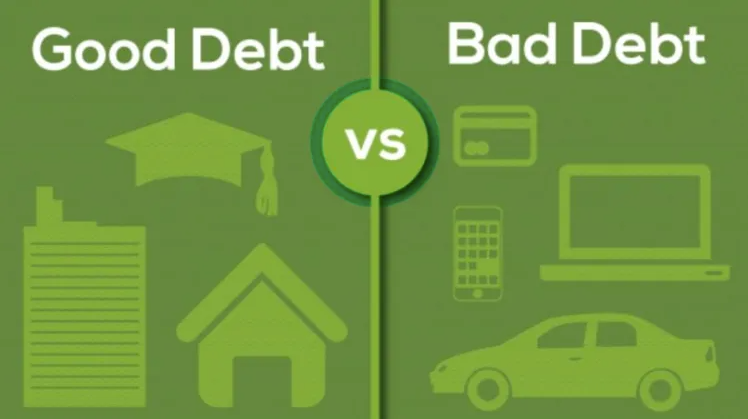
Good Debt vs. Bad Debt
To understand why a 10% or 12% interest rate can be attractive, we first have to strip away the negative emotional connotation of the word “debt.” In the financial world, debt is neutral. It only becomes “good” or “bad” based on how it is used.
Bad Debt is what most people are familiar with. It is consumer debt used to purchase depreciating liabilities—cars, vacations, clothes, or gadgets. This debt takes money out of your pocket and offers no potential for return.
Good Debt, conversely, is leverage. It is used to acquire appreciating assets that generate cash flow or equity growth that exceeds the cost of borrowing.
According to a member of the Forbes Real Estate Council, “Good debt is defined as money borrowed to purchase assets that appreciate or generate income.”
For real estate investors, debt can be a powerful tool rather than a liability. It lets you acquire high-value properties without tying up all your capital, allowing the property’s equity to work for you while keeping cash available for the next deal. You can know more about how asset-based funding helps investors scale efficiently and seize opportunities as they arise.
The Math of Leverage
Investors who fixate on interest rates often miss the forest for the trees. They look at a 12% hard money rate compared to a 7% conventional mortgage and assume the hard money loan is “too expensive.” However, because hard money loans are typically short-term (6 to 12 months), the actual dollar amount of interest paid is often negligible compared to the ROI generated by the leverage.
Let’s look at the math of “Cash-on-Cash Return.” This metric measures the cash income earned on the cash invested.
Consider two scenarios for buying a $100,000 investment property:
See also: Building a Scalable Talent Acquisition Strategy for Business Growth
Scenario A: The Cash Buyer (Low Risk, Low ROI)
You buy the property using $100,000 of your own cash.
- Appreciation: The property value goes up by 5% ($5,000).
- Your Return: You made $5,000 on a $100,000 investment.
- ROI: 5%.
Scenario B: The Leveraged Investor (High Cost, High ROI)
You buy the same property using $20,000 of your own cash and borrow the remaining $80,000.
- Appreciation: The property value goes up by 5% ($5,000).
- Your Return: You made $5,000 on a $20,000 investment (before interest costs).
- ROI: 25%.
Even after you deduct the interest costs of the loan for that year, your return on the actual cash you deployed is significantly higher than the cash buyer’s return.
As Forbes data highlights, “If a property appreciates by 5%, the return on a 20% down payment is not 5%, but 25%.”
When you use hard money, you preserve your own capital. That remaining $80,000 you didn’t spend in Scenario A can now be used to fund four other deals. That is the power of leverage.
Speed as Currency: The Hidden Value of Hard Money
In competitive housing markets, the “sticker price” of the interest rate is often irrelevant if you can’t close the deal. We see this constantly in the Pacific Northwest. A distressed property hits the market, and within 48 hours, there are multiple offers.
Sellers of distressed properties usually prioritize two things: certainty and speed. They want to know the money is there, and they want to close now.
This is where the “expense” of hard money pays for itself.
According to data from Bankrate, “Traditional bank loans often take 30-45 days, whereas hard money loans can typically close in 7 to 14 days.”
This speed gap is a massive negotiation lever. If you can close in 7 days, you are effectively a cash buyer in the eyes of the seller. This often allows you to negotiate a lower purchase price.
Consider this example:
- Asking Price: $300,000.
- Bank Offer: Offer $300,000, but needs 45 days to close and strict inspections.
- Hard Money Offer: Offer $290,000, closing in 10 days, as-is condition.
The seller often takes the $290,000 offer for the certainty and speed. In this scenario, you saved $10,000 on the purchase price. That savings alone likely covers the entire interest cost of the hard money loan. The “expensive” money actually saved you money.
Asset-Based Lending: A Strategy, Not a Last Resort
Many new investors mistakenly believe that hard money is a “last resort” for people with bad credit. This is false. Hard money is a strategic tool used by sophisticated investors who understand the value of Asset-Based Lending.
Traditional banks utilize “Credit-Based” underwriting. They obsess over your debt-to-income ratio, your W2 history, and your credit score. They look backward at your financial history.
Private lenders and hard money lenders utilize “Asset-Based” underwriting. We look forward. We look at the asset itself.
- What is the property worth now?
- What will it be worth after repairs (After Repair Value or ARV)?
- Does the deal make sense?
This approach is superior for fix-and-flips and distressed properties because it aligns the loan with the potential of the project, not the borrower’s tax return. At Hopkins Financial Services, our suite of investment loans, bridge loans, and construction loans are designed specifically for this purpose—to provide the speed and leverage necessary to capitalize on opportunities in the PNW market.
Conclusion
The goal of real estate investing is not to avoid paying interest; the goal is to generate profit.
When you shift your mindset from a consumer perspective to an investor perspective, the interest rate becomes just another input in your calculation. “Good Debt” isn’t defined by a low percentage rate; it’s defined by what it does for your portfolio. If a loan allows you to secure a deal quickly, maximize your leverage, and generate a high cash-on-cash return, it is good debt—regardless of the rate.
Don’t let the fear of “expensive” money cost you lucrative deals. If you have found an opportunity but need the capital to execute it quickly, contact Hopkins Financial Services. Let’s discuss how asset-based leverage can help fund your next project.