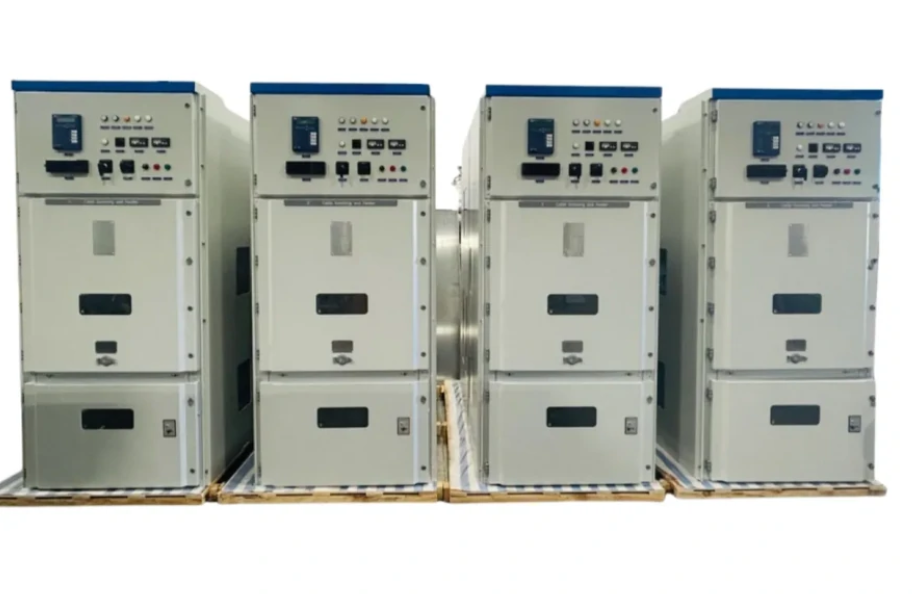
Industrial power distribution relies on safe and reliable control of electrical energy across complex networks. Switchgear plays a central role in this process by protecting equipment, isolating faults, and ensuring continuity of supply. Modern facilities depend on high-quality switch gear products to manage voltage levels, interrupt fault currents, and coordinate power flow across machinery, control panels, and substations.
Understanding the different types of switchgear and where they are used helps engineers and facility managers design systems that are safe, efficient, and scalable.
What Is Switchgear in Industrial Power Systems
Switchgear refers to assemblies of switching and interrupting devices combined with control, measurement, and protection equipment. These assemblies allow operators to energize or de-energize circuits, isolate equipment for maintenance, and clear faults before they damage assets or cause downtime.
Core functions include:
- Switching normal load currents on and off
- Interrupting short-circuit and overload currents
- Isolating sections of the network for safety
- Monitoring voltage, current, and system status
Industrial switchgear ranges from compact low voltage panels feeding motor control centers to large metal-clad assemblies used in substations.
Classification of Switchgear by Voltage Level
Switchgear is commonly categorized by the voltage it handles. Each level has distinct design features, insulation methods, and applications.
Low Voltage Switchgear
Low voltage switchgear typically operates at voltages up to 1 kV. It is widely used inside factories and commercial facilities to distribute power to motors, lighting, HVAC systems, and process equipment.
Key characteristics:
- Air insulation and molded case or air circuit breakers
- Modular panel construction for easy expansion
- Integration with motor control centers and PLC systems
- High accessibility for operation and maintenance
Typical applications include manufacturing plants, water treatment facilities, and building services where power distribution occurs close to the load.
Medium Voltage Switchgear
Medium voltage switchgear covers roughly 1 kV to 36 kV and is common in industrial substations and large facilities with heavy loads. It distributes power from utility feeders or onsite generation to transformers and major equipment.
Notable features:
- Vacuum or SF6 circuit breakers for fault interruption
- Metal-clad compartments isolating each functional unit
- Draw-out breakers for maintenance safety
- Protection relays for coordinated fault clearing
Industries such as mining, steel, cement, and petrochemicals rely on medium voltage systems to feed high-power motors and process lines.
High Voltage Switchgear
High voltage switchgear generally refers to equipment above 36 kV used in transmission and large utility substations. Industrial plants with captive generation or direct transmission connections also use high voltage assemblies.
Distinctive aspects:
- Gas or air insulation for very high dielectric strength
- Large circuit breakers capable of interrupting extreme fault currents
- Outdoor or gas insulated enclosed construction
- Integration with protection and SCADA systems
High voltage switchgear ensures stable power transfer between grid connections, substations, and large industrial complexes.
Types of Switchgear by Insulation Medium
Beyond voltage classification, switchgear is also differentiated by how it insulates live parts and extinguishes arcs during switching.
Air Insulated Switchgear
Air insulated switchgear uses atmospheric air as the primary dielectric medium. Components are separated by clearance distances and barriers to prevent flashover.
Advantages include:
- Simple design and lower cost
- Easy inspection and maintenance
- Good heat dissipation
However, AIS requires larger physical space and is more exposed to environmental conditions, making it common in indoor LV panels and outdoor HV yards where space is available.
Gas Insulated Switchgear
Gas insulated switchgear encloses conductors and breakers in sealed compartments filled with insulating gas, typically SF6 or alternative eco-gases. This allows very compact assemblies with high dielectric strength.
Key benefits:
- Minimal footprint for space-constrained sites
- Protection from dust, moisture, and pollution
- High reliability and reduced maintenance
GIS is widely used in urban substations, offshore platforms, and modern industrial plants where space and environmental control are critical.
Oil Insulated Switchgear
Oil insulated switchgear uses insulating oil to both isolate live parts and extinguish arcs. Historically common in medium and high voltage installations, it has largely been replaced by vacuum and gas technologies.
Characteristics:
- Excellent arc quenching properties
- High insulation strength
- Bulkier construction and fire risk considerations
Today oil insulated switchgear is mostly found in legacy installations or specialized applications where oil circuit breakers remain in service.
See also: Why Sleep Advice Fails: The Science of Grounding for Better Rest
Types of Switchgear by Interrupting Technology
Switchgear performance is strongly influenced by the type of circuit breaker used to interrupt fault currents. Visit Meta Power Solutions as they design, manufactures, and supplies commercial and industrial transformers.
Air Circuit Breaker Switchgear
Air circuit breakers interrupt arcs in open air using arc chutes and magnetic blowout mechanisms. They are mainly used in low voltage main distribution panels.
Typical attributes:
- High current ratings up to several thousand amperes
- Adjustable protection settings
- Long mechanical life
They are ideal for main incomers, bus couplers, and large feeders in industrial LV systems.
Vacuum Circuit Breaker Switchgear
Vacuum circuit breakers extinguish arcs in a sealed vacuum interrupter where there is no ionized medium to sustain conduction. They are the dominant technology in medium voltage switchgear.
Advantages include:
- Very fast arc extinction
- Minimal contact wear
- Long service life and low maintenance
- No gas handling requirements
Vacuum switchgear is widely adopted in industrial substations due to reliability and environmental safety.
SF6 Circuit Breaker Switchgear
SF6 circuit breakers use sulfur hexafluoride gas to quench arcs and provide insulation. They are common in medium and high voltage switchgear and GIS assemblies.
Performance characteristics:
- Excellent dielectric strength
- High interrupting capacity
- Compact design
Environmental concerns regarding greenhouse impact are driving development of alternative gases, but SF6 switchgear remains prevalent in many installations.
Types of Switchgear by Construction Design
Mechanical configuration determines how switchgear units are assembled, accessed, and maintained.
Metal Enclosed Switchgear
Metal enclosed switchgear houses all live components within grounded metal compartments. It is common in both low and medium voltage systems.
Features include:
- Protection against accidental contact
- Segregation of busbars, breakers, and cables
- Improved operator safety
It is widely used in industrial distribution rooms and control centers.
Metal Clad Switchgear
Metal clad switchgear is a specialized form of metal enclosed design where each major component is isolated in its own compartment separated by grounded barriers.
Benefits:
- High fault containment capability
- Draw-out breakers for safe maintenance
- Reduced arc propagation risk
Metal clad switchgear is standard in medium voltage industrial substations where safety and uptime are critical.
Outdoor Switchgear
Outdoor switchgear is designed for installation in open environments such as switchyards or plant perimeters. It uses weatherproof enclosures or open air insulation with large clearances.
Common uses:
- Utility incoming feeders
- High voltage substations
- Industrial generation plants
Outdoor construction allows heat dissipation and easy access but requires protection from environmental stress.
Specialized Industrial Switchgear Types
Certain industries require switchgear tailored to specific operational conditions.
Motor Control Center Switchgear
Motor control centers combine switchgear, motor starters, protection, and control circuits in modular panels feeding multiple motors. They are essential in process industries with numerous drives.
They provide centralized control, coordinated protection, and simplified wiring for large motor fleets.
Arc Resistant Switchgear
Arc resistant switchgear is designed to contain and redirect internal arc faults away from personnel. Reinforced enclosures and pressure relief paths protect operators during catastrophic failures.
This type is common in critical industrial facilities where personnel safety is paramount.
Withdrawable and Fixed Switchgear
Switchgear breakers may be fixed mounted or withdrawable. Withdrawable designs allow the breaker to be racked out for maintenance while keeping busbars energized and isolated.
Industrial plants favor withdrawable medium voltage switchgear to reduce downtime and improve safety during servicing.
Selecting the Right Switchgear for Industrial Applications
Choosing appropriate switchgear depends on electrical ratings, environment, safety requirements, and operational needs.
Key considerations include:
- System voltage and fault level
- Space availability and layout
- Environmental conditions such as dust or humidity
- Maintenance philosophy and access needs
- Safety standards and arc protection
Engineers evaluate these factors to determine whether low voltage, medium voltage, or high voltage switchgear and which insulation and breaker technologies are most suitable.
Role of Switchgear in Industrial Reliability and Safety
Switchgear is not only a distribution component but also a protective system that prevents equipment damage and production loss. Fast fault clearing isolates failures before they propagate through the network.
Coordinated protection between switchgear levels ensures selective tripping so only the affected section is disconnected. This maintains continuity of operation in the rest of the plant.
Modern digital relays and monitoring integrated into switchgear provide real-time data on load, faults, and equipment health, supporting predictive maintenance strategies.
Future Trends in Industrial Switchgear
Industrial power systems are evolving with electrification, automation, and sustainability goals. Switchgear technology is adapting to meet these demands.
Developments include:
- Eco-friendly insulating gases replacing SF6
- Smart switchgear with IoT sensors and analytics
- Compact GIS for modular substations
- Enhanced arc resistant designs
These innovations improve efficiency, reduce environmental impact, and enable smarter energy management in industrial facilities.
Conclusion
Industrial power distribution depends on a wide range of switchgear types designed for different voltages, insulation methods, and operational roles. Low voltage panels distribute power within facilities, medium voltage switchgear feeds major equipment, and high voltage assemblies connect plants to transmission networks.
Air, gas, and vacuum technologies provide insulation and interruption suited to various environments and fault levels. Construction styles such as metal clad and arc resistant designs enhance safety and reliability. Understanding these types allows engineers and facility operators to build resilient electrical systems that support continuous industrial operation.