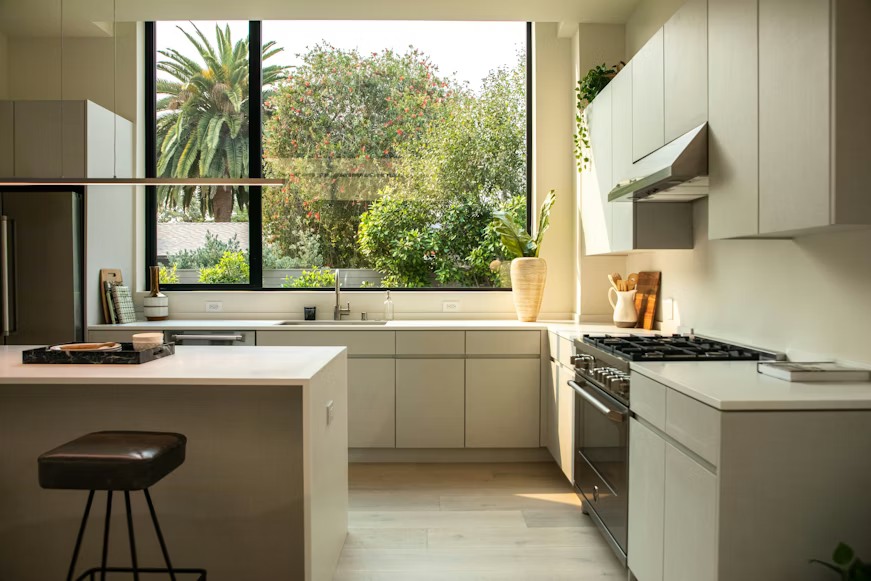
A small kitchen is not a flaw. It is a constraint. And constraints, when respected, lead to better design than wide-open space ever does. The trouble starts when people try to cram a full-size kitchen into half the footprint. Drawers fight cabinet doors. The fridge blocks the sink when it is open. And the trash bin ends up in the only spot where you could have stood to chop an onion. A renovation gives you a way out, but only if you plan it for the space you actually have rather than the space you wish you had.
The ideas below come from working with cooks who use every square inch they own. Nibbles Worth has covered home cooking topics for a long time, and small-kitchen cooks tend to ask the sharpest questions about layout because they live with the consequences fastest. None of these ideas require a wall to come down. Most of them save space without making the kitchen feel any tighter than it already is.
Build up, not out
Vertical space is the most underused area in a small kitchen. Standard upper cabinets stop short of the ceiling and leave a foot of dead space that collects dust. Run the cabinets all the way up. Use the top shelf for serving platters, baking sheets, and party glasses you only need a few times a year. A small step stool tucked into a toe-kick drawer pays for itself the first holiday meal you host.
Pull-out everything you can
Doors waste space. They eat the front three inches of every cabinet you cannot fit a hand into. Replace lower-cabinet doors with deep drawers and add pull-out racks inside upper cabinets where they fit. A pull-out pantry, even one six inches wide between the fridge and the wall, holds more cans and spice jars than expected.
Pick slim appliances and fight for counter
Standard appliances were sized for suburban kitchens. A 24-inch dishwasher, an 18-inch fridge, or a slim wall oven free up real counter inches for prep. The counter you save is worth more than the casserole dish you give up. If you bake rarely, a combo wall oven with microwave saves a full cabinet. If you cook for one or two most nights, a two-burner cooktop is plenty and leaves room for a tiny work zone next to it.
Use the toe-kick
Most kitchens ignore the toe-kick. That four-inch strip below the lower cabinets is dead space. Custom toe-kick drawers slide out and hold flat items like cookie sheets, cooling racks, cutting boards, and platters. You stop fighting the spot above the fridge for things you only use once a week.
Light surfaces, lighter walls
A small kitchen with dark cabinets and a dark backsplash will feel smaller than it is. Lighter cabinet finishes, a light kitchen backsplash, and reflective counter surfaces all push the visual edge of the room outward. You do not have to go all-white. Pale wood, a soft green, or a warm gray all read open. The point is contrast: the room should feel airier than the next one over.
See also: What to Expect from a Complete Home Automation Installation Process
Open shelving where it earns its place
Open shelves divide opinion. They look great empty and gather dust full. The compromise is selective use: one or two shelves where you keep daily-use bowls, plates, and mugs that get washed often enough to stay clean. Closed cabinets handle the rest. You get the visual lightness without the maintenance.
Pull-out counter
A hidden pull-out counter, often built into a base cabinet at hip height, gives you an extra prep surface that disappears when you do not need it. Some owners use the top of a pull-out trash drawer as a temporary cutting board for fast jobs.
Magnetic and rail storage on walls
A magnetic knife strip frees a knife block off the counter. A rail system on the backsplash holds spice jars, ladles, and graters off the counter and out of drawers. Walls do work that drawers cannot. The trick is to use them for the items you reach for most so they earn their visual weight.
A smart island only if it fits
Tiny kitchens often try to force a full island into the floor plan. Most of the time, a rolling cart with a butcher block top works better. You can pull it out for prep, push it against a wall when you need to walk through, and stash a few cookbooks and a fruit bowl on the lower shelf. A fixed island in a small space steals more room than it gives back.
Lighting that makes the room feel taller
Recessed lights, an under-cabinet LED strip, and a small pendant over the sink change how the kitchen reads at night. Dark corners shrink a room. Even, layered light makes a small kitchen feel its full size.
A small kitchen rewards planning more than a big one. Walk the room with a notebook, list every frustrating spot, and design around those notes before picking finishes.