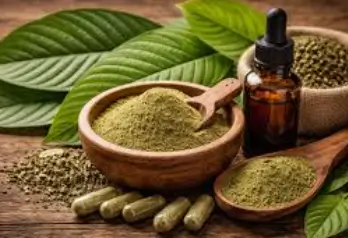
Every botanical with a long cultural history has a story that gets compressed when it crosses into mainstream awareness. The plant becomes a product, the tradition becomes marketing copy, and the cultural context that produced it becomes background noise. Kratom, the Southeast Asian plant that has become an increasingly visible part of Western wellness conversations over the past decade, is one of the clearer examples of this compression.
Kratom (Mitragyna speciosa) is a tropical evergreen tree native to Southeast Asia, particularly Thailand, Indonesia, Malaysia, Myanmar, and Papua New Guinea. For centuries, communities in these regions used kratom leaves traditionally, chewed fresh or brewed into a tea, as part of agricultural and cultural practices. The plant’s emergence in Western markets is relatively recent, and the conversation around it has been shaped by both genuine cultural curiosity and significant regulatory and safety debate.
This is a look at kratom’s cultural history, its modern status, and what readers should understand about a substance that has become a recurring topic in wellness conversations without being well understood.
Where kratom comes from
Mitragyna speciosa is part of the coffee family. The tree grows in the humid tropical regions of Southeast Asia, where it has been part of traditional culture for centuries. In Thailand and Malaysia particularly, kratom leaves have historical use by agricultural workers, who chewed fresh leaves during long working days. In some regions, the leaves were also brewed into a tea consumed during social gatherings and traditional ceremonies.
The plant’s pharmacology comes primarily from a few alkaloid compounds, with mitragynine and 7-hydroxymitragynine being the most studied. These compounds interact with several receptor systems in the body, which is part of why kratom’s effects have been described differently in different contexts and at different doses.
How kratom entered Western markets
The expansion of kratom into Western markets accelerated in the early 2010s, driven primarily by online retailers and a growing wellness community interested in botanical supplements. By the mid-2010s, kratom had become widely available across most of the United States and parts of Europe, sold typically as dried, powdered leaf material in various varieties named for their region of origin and processing method.
The market has grown substantially since then. Independent retailers, specialty wellness stores, and online vendors now sell various forms of kratom, with kratom powder being the most common format. Different vendors emphasise different sourcing standards, lab testing, and quality control practices, and the responsible end of the market has matured around third-party testing for purity and contaminants.
Regulatory status
The regulatory status of kratom is genuinely complex and worth understanding accurately.
In the United States, kratom is federally unregulated, meaning the FDA has not approved it for any medical use, but it is not classified as a controlled substance under federal law. State-level regulation varies significantly. A small number of states have banned kratom outright. Other states have implemented age restrictions, labelling requirements, or limited regulations. The majority of states allow kratom sales without significant restriction.
The FDA has issued several safety advisories about kratom, citing concerns about potential dependence, adulteration of commercial products, and health risks. The agency has not approved any kratom-containing product for any medical use, and any health claims associated with kratom products are unsupported by FDA-approved evidence.
Internationally, kratom is restricted or banned in some countries, including parts of Europe and Southeast Asia (notably Thailand had a long-standing ban that was relaxed in recent years). Travellers should verify the legal status of kratom in any country they plan to visit before bringing it across borders.
What the scientific community is studying
The scientific research on kratom has expanded substantially over the past decade, but remains an active and contested area. Studies have examined kratom’s pharmacology, its potential effects on pain perception, mood, and energy, and its potential risks including dependence, withdrawal, and health effects of long-term use.
The honest summary of the research is that kratom has both reported beneficial effects in some users and documented risks in others. Researchers studying kratom have called for more rigorous clinical trials to better characterise both. As of now, kratom is not approved by the FDA for any medical use, and any health claims about kratom should be treated with appropriate skepticism.
Safety considerations worth understanding
For anyone considering kratom, a few practical points worth understanding.
Quality varies significantly across vendors. Independent third-party lab testing for purity (including testing for heavy metals, salmonella, and adulterants) is the most reliable indicator of vendor quality. Responsible retailers publish these results.
Dependence and withdrawal are real risks. Regular kratom use can produce physical dependence, with withdrawal symptoms reported by some users on discontinuation. The risk increases with higher doses and longer duration of use.
Drug interactions matter. Kratom interacts with several common medications including opioids, certain antidepressants, and other psychoactive substances. Anyone taking prescription medication should consult a healthcare provider before using kratom.
Vulnerable populations should avoid kratom. Pregnant or breastfeeding women, individuals with liver or kidney conditions, and those with mental health conditions should be particularly cautious.
The reported user experience varies. Different doses, different varieties, and individual physiology produce significantly different experiences with kratom. There is no standardised dosing protocol, and individual responses range widely.
The cultural conversation around kratom
Kratom occupies an unusual cultural position. It is a traditional plant with centuries of cultural history in its native regions. It has entered Western wellness conversations as both a legitimate botanical interest and as a source of genuine safety concerns. The regulatory landscape is fragmented. The scientific evidence is mixed.
For readers interested in understanding kratom, the most useful framing is probably this: it is a botanical with a long cultural history, a complex pharmacology, real reported benefits in some users, and real documented risks in others. It is not a wellness product in the way many wellness products are marketed, and approaching it with that level of nuance produces better decisions than either dismissing it entirely or embracing it uncritically.
The takeaway
The story of kratom is the story of a traditional botanical that has crossed into modern wellness markets faster than the regulatory, scientific, and cultural conversation has caught up. The plant has real cultural roots, real pharmacological activity, real reported uses, and real documented risks.
For readers encountering kratom in wellness conversations, the most useful posture is informed caution. Understand what the substance is. Verify the legal status where you live. Know the safety considerations. Make decisions about personal use, if any, based on accurate information rather than marketing claims. And recognise that the substance is genuinely complex enough to deserve careful thinking rather than either casual adoption or reflexive rejection.
The cultural history is interesting. The modern conversation is unfinished.
See also: Modern Commercial Installation Solutions for Efficient Business Growth
Frequently Asked Questions
What is kratom? Mitragyna speciosa, a tropical evergreen tree native to Southeast Asia. The plant has a long history of traditional use in its native regions and has become a more visible part of Western wellness conversations over the past decade.
Is kratom legal in the United States? Kratom is federally unregulated in the US. State-level legality varies. A small number of states have banned kratom; most allow it with varying levels of regulation. Anyone considering kratom should verify the legal status in their specific state.
Is kratom FDA-approved? No. The FDA has not approved kratom for any medical use and has issued safety advisories about kratom. Health claims associated with kratom products are unsupported by FDA-approved evidence.
What forms does kratom come in? The most common form sold in Western markets is dried, powdered leaf material. Other forms include capsules, extracts, and concentrates. Powder is the format most discussed in vendor and consumer conversations.
What should I look for in a kratom vendor? Independent third-party lab testing for purity is the most reliable indicator of responsible sourcing. Reputable vendors publish lab results covering contaminants, heavy metals, and adulterants. Age restrictions and clear labelling are also reasonable indicators.
Are there dependence or withdrawal risks with kratom? Yes. Regular use, particularly at higher doses, can produce physical dependence. Withdrawal symptoms have been reported in users who discontinue regular use.
Does kratom interact with medications? Yes. Kratom can interact with several common medications, including opioids, certain antidepressants, and other psychoactive substances. Anyone taking prescription medication should consult a healthcare provider before considering kratom.
Who should avoid kratom entirely? Pregnant or breastfeeding women, individuals with significant liver or kidney conditions, people with serious mental health conditions, and anyone taking medications with potential kratom interactions should avoid use without medical guidance.