From neighborhood basketball courts and school tracks to tennis facilities and multi-use recreation areas, St. Louis sports surfaces face demanding conditions throughout the year. Rainstorms, humid summer heat, falling leaves, freeze-thaw cycles, and steady daily use can all affect safe footing, drainage, and the useful life of a court or field.
Facility managers can protect their investment by combining routine inspections with timely repairs and weather-aware scheduling. Local guidance for https://mcconnellassociates.org/sports-construction-court-maintenance-in-st-louis/ can help schools, parks, clubs, and property managers think beyond appearance and focus on surface performance, player safety, and long-term durability.
Why Weather Readiness Matters
St. Louis weather can shift quickly, which makes preparation more useful than a purely reactive approach. Heavy rain may leave puddles or wash debris toward drains. High temperatures can make a surface uncomfortable and intensify wear in busy areas. Winter freezing and thawing can expose cracks, joint movement, and weak spots that were less noticeable during warmer months.
Weather planning should begin before a forecasted storm or heat event. Staff can clear drains, secure portable equipment, inspect surface edges, and communicate closure procedures in advance. Practical weather-ready facility practices also support better decisions about when to pause play, inspect a surface, and reopen it safely.
The Role Of Proper Drainage
Drainage is one of the most important parts of an outdoor sports area, even though much of it is below or around the visible surface. Water that remains on a court, track, walkway, or field edge can create slippery conditions, collect dirt, encourage staining, and delay reopening after rain.
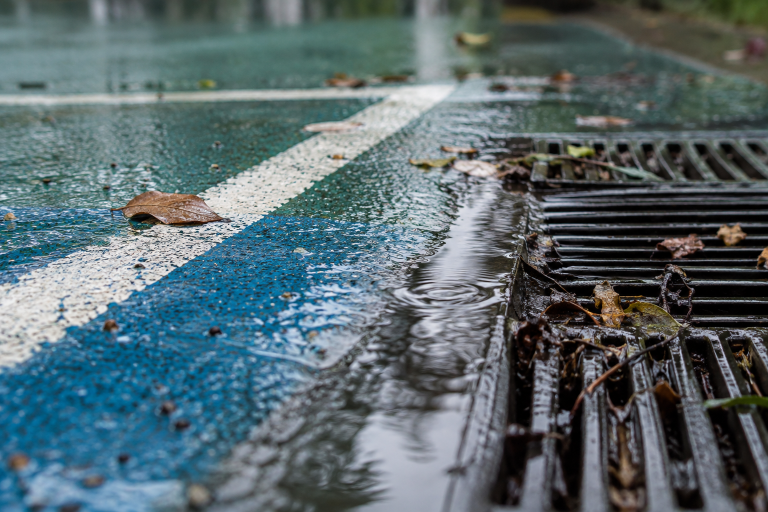
Good drainage begins with proper slope and grading so water moves away from the playing area. It also depends on drains, swales, surface channels, and surrounding landscaping remaining clear. Leaves, soil, mulch, and litter can obstruct runoff paths, especially around fence lines, entrances, and low points.
A puddle that returns in the same location after several storms deserves attention. It may signal a clogged drain, a worn surface, settlement in the base, or a grading concern. As outdoor facilities contend with changing rainfall patterns, preventative planning for drainage and site levels is increasingly important during renovations as well as new construction.
How Daily Use Creates Surface Stress
Weather is only part of the maintenance picture. Repeated games, practices, spectators, maintenance equipment, and deliveries place stress on the same areas day after day. In St. Louis community facilities, high-use seasons can make minor defects more visible in a short period of time.
Areas That Often Show Early Wear
- Entry gates, access paths, and transition areas.
- Spaces near benches, bleachers, and team gathering areas.
- Goal mouths, net locations, court lines, and baseline zones.
- Edges where leaves, sediment, and water collect.
- Locations where carts or maintenance equipment turn frequently.
Small issues are generally easier to manage when they are found early. A developing crack, loose edge, worn coating, or recurring wet spot should be documented before it becomes a more disruptive repair project.
What To Check During A Surface Inspection
A consistent inspection routine gives staff a clearer picture of what is changing and where repairs should be prioritized. Complete a walk-through weekly during active seasons and after major weather events.
- Walk the entire surface. Look for cracks, soft areas, uneven spots, peeling coatings, and visible wear.
- Check for standing water. Mark areas that stay wet after nearby sections have dried.
- Inspect edges and transitions. Examine drains, curbs, fences, joints, walkways, and surrounding ground.
- Review equipment connections. Check goals, anchors, posts, benches, nets, and padding.
- Record changes. Take photos, note the date, and identify the exact location of the concern.
- Set repair priorities. Address hazards first, then recurring drainage issues and cosmetic wear.
Seasonal Maintenance Steps
Spring
- Remove winter debris, leaves, and branches.
- Inspect cracks and joints after freeze-thaw conditions.
- Clear drainage paths before seasonal rainfall increases.
Summer
- Watch for fading, surface softening, and heat-related wear.
- Schedule cleaning and repair work during cooler periods when practical.
- Use established heat and lightning procedures for athletes, staff, and spectators.
Fall And Winter
- Clear leaves before they block drains or trap moisture.
- Schedule needed repairs before cold weather restricts materials or working conditions.
- Limit use when surfaces are frozen, saturated, icy, or otherwise unsafe.
Weather, Safety, And Play Decisions
A surface can look acceptable from a distance while still posing a safety concern. Damp coatings, hidden low spots, loose materials, or an unstable base may affect traction, footing, and ball response. Before reopening after rain or a storm, staff should confirm that drainage is functioning, puddles are gone, equipment is secure, and no new damage has appeared.
Closing a court or field briefly can prevent a longer shutdown caused by avoidable damage. Decisions should reflect actual site conditions, not only a game schedule or reservation calendar.
When Cleaning Is Not Enough
Sweeping, washing, and debris removal are necessary maintenance tasks, but they cannot correct an underlying drainage or structural problem. Professional assessment may be appropriate when the same puddle returns repeatedly, cracks widen, coatings peel across a broad area, repairs fail quickly, or users report unusual slipping or inconsistent bounce.
Temporary patches may help manage a limited issue, but they should not replace a proper evaluation when the cause may involve grading, drainage, or movement beneath the surface.
How To Build A Practical Maintenance Plan
A usable maintenance plan does not need to be complicated. Create an inventory of courts, fields, walkways, drains, and equipment. Assign weekly, monthly, seasonal, and post-storm inspection dates. Keep records of recurring concerns, separate urgent safety repairs from longer-term upgrades, and plan larger work around school breaks or lower-demand periods.
Review the plan annually. Inspection notes can reveal whether problems are tied to rain, heavy traffic, a particular season, or one section of the facility. That information makes repair budgets more focused and helps St. Louis facilities prepare for the next season instead of reacting after damage has spread.
Common Questions About Outdoor Sports Surfaces
How Often Should An Outdoor Sports Surface Be Inspected?
Conduct a basic weekly walk-through during active use, with additional checks after heavy rain, extreme heat, freezing weather, or unusually busy events.
What Is The First Sign Of A Drainage Problem?
Recurring standing water is often the clearest sign. Slow drying, soft areas, staining, and debris collecting in the same location can also indicate poor runoff.
Can Facility Staff Handle Routine Maintenance?
Staff can usually manage debris removal, visual inspections, basic records, and equipment checks. Larger cracks, resurfacing needs, grading concerns, and structural issues require qualified evaluation.
Should A Surface Be Used After Heavy Rain?
Use should resume only after the surface has drained and dried enough for safe movement. Playing on a wet or unstable surface can increase slipping risks and contribute to further damage.
Conclusion
Weather-ready sports surfaces in St. Louis depend on consistent care, not just strong materials. Sound drainage, regular inspections, timely repairs, and clear reopening decisions help reduce avoidable closures while supporting safer play. By responding early to small changes, schools, parks, clubs, and private facilities can keep outdoor recreation areas ready for the next practice, game, or community event.