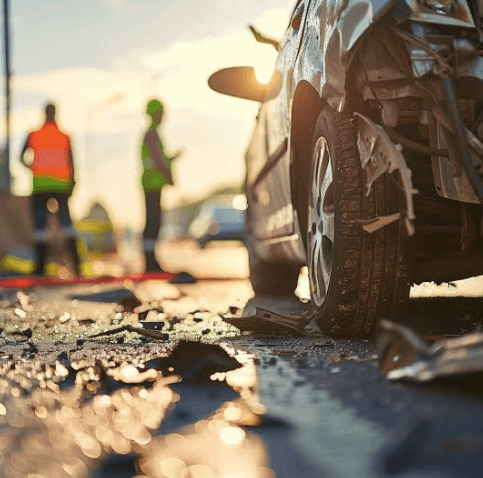
A collision file can look settled long before the facts are settled. A report, several photos, and brief witness accounts may appear complete, yet serious injury claims often turn on speed, distance, timing, and vehicle movement. Federal estimates show that roughly 40,990 people died on United States roads in 2023, which leaves courts and insurers sorting through many disputed crashes. Reconstruction experts help convert scattered details into a tested account.
Timing Matters
Liability disputes often hinge on fractions of a second and a few feet of roadway. In many serious cases, lawyers need more than witness memory to explain how the impact unfolded. That is why the legal team at Anidjar & Levine, like other counsel handling major collision claims, may turn to reconstruction work early, before insurer narratives settle into place and before critical scene evidence disappears.
Physics Beats Guesswork
Crash reconstruction depends on measurable conditions rather than instinct. Experts study braking distance, speed change, momentum, and contact angle. Those factors can indicate whether a driver reacted too late, entered a lane too soon, or lacked sufficient space to avoid an impact. A clean physical analysis often exposes statements that sound believable but fail once tested against motion and distance.
Vehicle Data Helps
Modern vehicles often record key information during a severe collision. That material may include pre-impact speed, brake use, steering input, seat belt status, and change in velocity. When recollection shifts after trauma, digital records can provide a steadier timeline. Data does not answer every question, though it can strongly support or weaken a party’s account of events.
Marks Tell a Story
Roadway evidence matters because motion leaves patterns behind. Skid marks may help estimate braking effort and travel path. Yaw marks can indicate sideways rotation before impact. Gouges, debris fields, and fluid drops often help identify where contact began. Each trace becomes far more useful when preserved quickly, before rain, traffic, or cleanup crews disturb the scene.
Damage Has Meaning
Vehicle damage extends beyond visible harm. Crush depth can help estimate impact severity and direction. Deformation patterns may also indicate whether a car was stopped, moving straight, or turning at contact. In side impact cases, those patterns can clarify which vehicle crossed a lane line first, even when no camera footage exists and witness accounts conflict.
Human Memory Has Limits
Honest people can still remember a crash poorly. Stress affects perception, compresses time, and narrows attention. One witness may insist a light was green, while another recalls sudden braking first. Reconstruction provides an external check of the file. Measurements, scene images, data downloads, and mapped positions allow statements to be tested against objective conditions rather than confidence.
Pileups Need Order
Multi-vehicle collisions create a harder causation problem. Several impacts may occur within seconds, yet each strike can produce separate injuries and distinct faults. Reconstruction experts sort that sequence. They identify first contact, later hits, and final rest positions. That order matters because one motorist may trigger the chain, while another adds damage after the initial crash.
Insurers Go Over Numbers
Insurance carriers focus on weak points in proof. Without technical support, adjusters may argue that injuries came from a later impact, a prior condition, or a minor force event. Reconstruction analysis answers those claims with measurements and tested conclusions. A stronger causation record can change settlement posture because the defense sees a clearer trial risk.
Courtroom Proceedings Need Clarity
Judges and jurors do not need an engineering lecture. They need a reliable explanation of what happened and why it matters. A strong expert can turn maps, photographs, module downloads, and formulas into a sequence ordinary people can follow. That clarity helps fact finders distinguish between possibility and probability without drifting into speculation or confusion.
See also: Daily Dental Habits for Lifelong Oral Health
Injury Causation Counts
Severe injury claims often rise or fall on causation, not fault alone. The case must connect bodily harm to the force, direction, and mechanics of impact. Reconstruction experts work well alongside treating doctors and other medical witnesses here. In rollover, underride, or side-impact collisions, motion analysis may explain why the injury pattern fits the collision.
Conclusion
Crash reconstruction experts bring discipline to disputed injury cases. They preserve fragile evidence, measure physical conditions, and test competing accounts against speed, movement, and impact dynamics. That work can sharpen fault analysis, strengthen causation proof, and improve settlement value before trial. In court, the same findings help jurors see an ordered sequence instead of a blur. For serious collisions, that structure often marks the line between a doubtful claim and a persuasive one.