Key Takeaways
- Set a full ownership budget before comparing trucks.
- Choose a truck based on real towing, hauling, and driving needs.
- Review the VIN, title, service records, and recall history.
- Inspect the frame, engine, transmission, tires, brakes, and suspension.
- Use an independent mechanic for a pre-purchase inspection.
- Compare the total deal price instead of focusing only on the monthly payment.
- Walk away when the truck has too many unknowns or serious safety concerns.
Buying a pre-owned pickup in North Texas can be a smart move, whether you need a daily commuter for I-635, a jobsite vehicle, or a truck for weekend trips outside the city. Before comparing used trucks for sale Dallas, build a plan that looks beyond paint condition, trim level, and the advertised monthly payment. Dallas buyers should take their time. Heat, heavy traffic, frequent towing, rough work use, hail exposure, and long highway miles can all affect a truck differently. The goal is not simply to find the cheapest pickup. It is about finding one with a history, condition, and total ownership cost that makes sense for your needs.
Set a Realistic Truck Budget
The purchase price is only the starting point. Your budget should also leave room for sales tax, title and registration costs, insurance, fuel, routine maintenance, replacement tires, and repairs. A used truck may need immediate attention even when it drives well during a short test drive. Set aside a repair reserve for the first year, especially when considering an older truck or one with higher mileage. A lower-priced pickup can be a good value if it has been well-maintained. Still, it can quickly become expensive if it needs tires, brakes, suspension work, cooling system repairs, or major drivetrain service soon after purchase. Compare total cost rather than payment size. A longer loan term can reduce the monthly payment while increasing the total amount paid. Ask for the full out-the-door price, then compare financing offers before deciding.
Match the Truck to Its Main Job
Dallas-area truck shoppers have different priorities. A pickup used for commuting through Plano or downtown Dallas may need manageable dimensions, good visibility, and a comfortable cabin. A truck used for landscaping, construction, farm work, or trailer towing needs the right payload, bed, hitch equipment, and braking capacity.
Questions to Answer Before You Shop
- How often will the truck tow a trailer?
- What is the heaviest load you expect to carry or pull?
- Will most miles be in city traffic, on highways, or at worksites?
- Is a larger cab more useful than a longer bed?
- Would a smaller truck meet the need with lower fuel and maintenance costs?
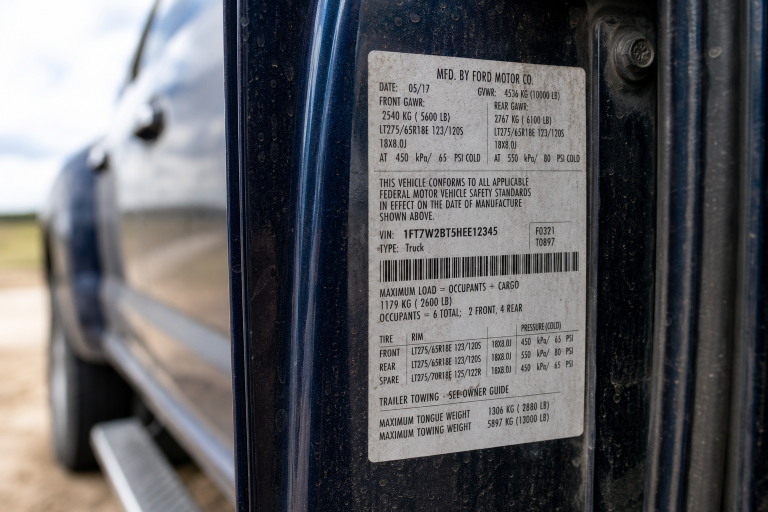
Do not assume a bigger truck is automatically better. Check the door-jamb payload label, towing information, and equipment fitted to the specific truck. Tow ratings can vary with engine, axle ratio, cab style, bed length, drivetrain, and factory towing package.
Research the Truck Before Visiting
Get the VIN before you spend time visiting a listing. Compare it with the advertised model year, trim, drivetrain, engine, mileage, and title information. Ask for service records when available, and look for gaps that may matter, such as missing oil-change history or no documentation for major repairs. A vehicle history report can help identify reported accidents, title brands, mileage inconsistencies, or auction activity, but it cannot confirm that the engine, transmission, and suspension are healthy. Use it as one part of your research, not as a replacement for a physical inspection. Also, use the VIN to check open safety recalls before buying. An unrepaired recall does not necessarily make a truck a bad purchase, but you should understand the issue and confirm how the repair will be handled.
Inspect the Body, Frame, and Undercarriage
Inspect the truck in daylight, ideally when the body is dry and clean enough to see flaws clearly. Walk around it slowly. Look for mismatched paint, overspray on trim or rubber seals, uneven gaps around the hood and doors, damaged bed rails, and tailgate problems. Test lights, windows, locks, mirrors, cameras, and climate controls.
Pay Close Attention Underneath
Look underneath for heavy rust, holes, bent frame sections, cracked mounts, poor welds, and leaking fluids. Fresh undercoating deserves a closer look because it can make an undercarriage appear cleaner while hiding corrosion or repairs. Check the tires for uneven wear, which can indicate alignment, steering, or suspension issues.
Check the Engine, Transmission, and Drivetrain
Mechanical condition matters more than mileage alone. If possible, start the truck when the engine is cold. Listen for persistent knocking, tapping, grinding, or rattling. Watch for warning lights, rough idle, overheating, hard starts, or unusual exhaust smoke. During the drive, the transmission should engage and shift predictably. Test four-wheel drive, low-range, and other drivetrain controls, if equipped. Ask when the truck last received transmission, coolant, differential, and spark-plug service. Then arrange an independent pre-purchase inspection covering the powertrain, brakes, steering, suspension, tires, electronics, leaks, and frame condition.
Take a Purposeful Test Drive
A trip around the block is not enough. Drive on surface streets and, when possible, at highway speed. Accelerate from a stop, merge smoothly, brake at different speeds, and notice whether the truck tracks straight without constant steering correction. Listen for clunks over bumps, brake vibration, wind noise, or clicking during tight turns. Test reverse, parking sensors, cameras, infotainment functions, and air conditioning. A truck may feel normal on a slow neighborhood route but reveal hesitation, pulling, steering looseness, or vibration once speed and load increase.
Review the Deal and Paperwork
Request the out-the-door price in writing and separate the vehicle price from taxes, registration, dealer fees, warranties, and optional products. Review the interest rate, loan term, finance charge, and total of payments. Spoken promises are easy to forget, so make sure agreed repairs, included equipment, and warranty terms are written into the deal documents. The federal guidance for buying a used vehicle from a dealer also explains why buyers should review the Buyers Guide, understand whether a vehicle is sold as is or with a warranty, and obtain an independent inspection.
Know When to Walk Away
- Severe structural rust, frame damage, or evidence of flood or fire damage.
- A flashing check-engine light, overheating, or major fluid leaks.
- Transmission slipping, grinding, or delayed engagement.
- Unsafe tires, weak brakes, loose steering, or damaged suspension parts.
- Missing records paired with high mileage and unanswered questions.
- Pressure to skip an inspection, rush paperwork, or accept unexplained fees.
Final Checklist for a Smarter Purchase
- Your hauling, towing, and daily-driving needs are clear.
- Total ownership costs fit your budget.
- The VIN, title history, and recalls have been checked.
- The truck passed a thorough visual and mechanical inspection.
- The test drive revealed no serious concerns.
- The out-the-door price and financing terms are fully understood.
A smart used-truck purchase in Dallas depends on preparation, patience, and honest cost estimates. The right truck is not always the newest, largest, or most heavily equipped option. It is the one that fits your work, driving habits, budget, and comfort level with future maintenance.
Conclusion
Buying a used truck in Dallas is best approached as a complete evaluation rather than a quick comparison of prices or monthly payments. Buyers should establish a realistic ownership budget, identify their actual towing, hauling, commuting, and work needs, and then compare trucks based on their specific capabilities and condition. Reviewing the VIN, title history, service records, and recall information can provide important background, while a detailed inspection should cover the frame, engine, transmission, drivetrain, tires, brakes, and suspension. An independent mechanic can identify mechanical or structural concerns that may not be apparent during a short test drive. Buyers should also request the full out-the-door price and review financing terms, fees, warranties, and other costs before signing. If a truck has serious safety concerns, significant unknowns, or a seller who is unwilling to allow a proper inspection, walking away may be the more practical choice. A careful process can help Dallas buyers select a truck that fits both their needs and budget.