Key Takeaways
- A climate-ready landscape begins with the property’s sunlight, slope, soil, and water movement.
- Native and regionally adapted plants can create attractive layers while supporting a more resilient planting plan.
- Drainage concerns should be addressed before installing patios, walkways, planting beds, or retaining features.
- Outdoor living areas are more useful when shade, circulation, privacy, lighting, and seating are planned together.
- Durable materials and realistic maintenance routines help a Virginia yard remain functional through changing seasons.
Virginia landscapes need to do more than look polished in spring. From humid Tidewater summers and heavy coastal rain to Piedmont clay soils and mountain freeze-thaw cycles, a successful yard must respond to the conditions of its specific property. Working with an experienced landscaping company Virginia homeowners trust can help turn those conditions into a practical plan for planting, drainage, hardscaping, and everyday outdoor enjoyment.
What Makes a Landscape Climate-Ready?
A climate-ready landscape is designed to handle normal seasonal changes as well as stressful weather, including summer heat, sudden downpours, dry stretches, wind, and winter temperature swings. It balances curb appeal with practical performance. The result can be formal, naturalistic, modern, or traditional. Climate-ready design is not a single visual style.
For Virginia homeowners, this approach often means protecting soil, directing runoff thoughtfully, providing shade where people gather, and selecting plants that fit the actual site. A healthy design treats the lawn, beds, trees, hardscape, and drainage system as connected parts of one outdoor environment.
Start With a Careful Site Review
Begin with observation instead of a wish list. Walk the property in the morning, afternoon, and after rainfall. Notice full-sun areas, deep shade beneath mature trees, exposed slopes, compacted soil, and places where water stands. Take photographs in different seasons so changes in light, leaf cover, and drainage are easier to compare.
Questions to Answer Before Designing
- Where does roof runoff go after leaving the downspouts?
- Which paths do family members, pets, guests, and maintenance equipment use most?
- Which views should be framed, softened, or screened?
- Are there roots, utilities, septic components, fences, or existing trees that shape the layout?
- Where would seating be comfortable on an ordinary weekday?
Choose Plants for Real Growing Conditions
The most dependable planting strategy is simple: match plants to the place where they will grow. Before choosing by flower color alone, consider mature size, sunlight, soil texture, moisture needs, drainage, wind exposure, and the amount of care available. Virginia Tech guidance on native plants in the landscape also emphasizes site analysis and the “right plant in the right place” approach.
Native plants can be valuable additions, but they still need suitable conditions. A wet-tolerant shrub is not automatically right for a dry foundation bed, and a sun-loving perennial will struggle beneath dense tree cover. Combine trees, shrubs, perennials, grasses, and ground covers to create layers that offer seasonal interest, privacy, and visual depth.
Solve Drainage Before Adding Features
Drainage should be addressed before any finished surface is installed. Water that repeatedly pools near a patio can loosen the base material, stain surfaces, create slippery areas, and stress nearby plant roots. A low spot may seem minor until a new walkway or planting border prevents water from spreading naturally.
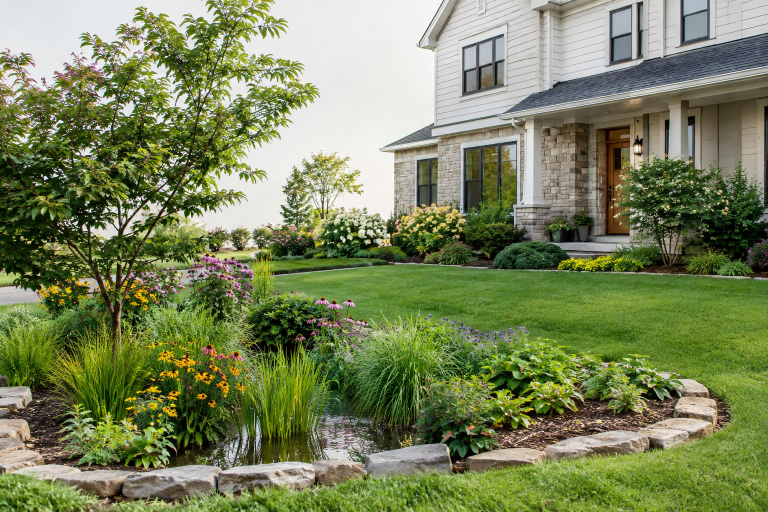
Trace runoff from the roof, driveway, lawn, and neighboring grades. Depending on the site, solutions may include regrading, swales, properly directed downspout extensions, gravel drainage areas, permeable paving, erosion-control planting, or a rain garden. Virginia homeowners can use rain gardens and grassy swales to reduce runoff from impervious surfaces while adding a planted focal point.
Water should be directed away from foundations, retaining walls, and heavily traveled paths. Test for any drainage changes during multiple rain events before covering the area with final mulch, stone, pavers, or turf.
Plan Outdoor Living Around Daily Use
A beautiful patio is more valuable when it works for daily routines. Separate cooking, dining, lounging, play, and circulation areas so people can move comfortably without cutting through the center of a gathering space. Walkways should be clear enough for two people to pass, especially near doors, gates, and outdoor kitchens.
In Virginia’s warm months, shade can be as important as square footage. Shade trees, pergolas, umbrellas, and covered structures can make seating areas more comfortable. Place lighting near steps, entrances, changes in elevation, and seating zones. Repeating a few materials or colors across patios, borders, planters, and paths helps the entire yard feel connected.
Select Materials That Age Well
Natural stone, brick, concrete, composite materials, and gravel can all be appropriate choices. The best option depends on drainage, soil movement, intended use, budget, and the desired appearance. Textured materials are often a practical choice where surfaces may get wet. More importantly, a durable base, correct grading, and careful installation usually matter just as much as the material visible from above.
Build in a Simple Maintenance Plan
Low-maintenance does not mean maintenance-free. New plants need regular watering while they establish, and mulch should be refreshed without piling it against trunks or stems. Inspect downspouts, drains, channels, patios, walls, and landscape lighting seasonally. Prune according to each plant’s growth habit, remove crowded or invasive growth early, and adjust irrigation as plants mature and weather patterns change.
A Virginia Landscape Planning Checklist
- □ Identify sun, shade, slope, soil, and drainage patterns.
- □ Choose plants for mature size and real site conditions.
- □ Keep runoff away from foundations, walls, and main walkways.
- □ Group plants with similar moisture needs.
- □ Plan gathering areas and paths before adding decorative features.
- □ Add shade, privacy, and lighting where they improve daily use.
- □ Select materials suited to the site and expected maintenance.
- □ Create a seasonal inspection and care routine.
The strongest Virginia landscape designs begin with careful observation and then build beauty around the property’s realities. When plants, drainage, materials, and outdoor living areas are planned as a single system, the yard can handle changing weather while remaining welcoming year-round.