Key Takeaways
- The best fence starts with a clear purpose, whether that is privacy, pet containment, safety, appearance, or defining a boundary.
- Wood, vinyl, aluminum, and chain link each involve different trade-offs in maintenance, visibility, durability, and cost.
- Indiana weather, drainage, soil movement, wind, and gate access should influence the design before installation begins.
- Property lines, easements, utility locations, permits, and HOA rules should be confirmed early.
Table of Contents
- Start With the Main Goal
- Compare Common Fence Materials
- Plan for Indiana Weather and Soil
- Match the Design to Daily Life
- Check Lines, Easements, and Rules
- Know the Installation Process
- Decide Between Repair and Replacement
- Use a Simple Planning Checklist
A fence can change how a yard feels and functions, but the right choice is not always the tallest or most expensive one. A practical plan considers the property, the people and pets using it, and the work required to keep it in good condition through Indiana’s changing seasons.
For homeowners comparing privacy fence installers Huntington, Mason Fence offers residential fence installation, repair, and replacement in Huntington and across Northeast Indiana. Its Huntington service focuses on wood, vinyl, aluminum, and chain-link options, with on-site property reviews that help account for yard layout, ground conditions, privacy goals, and local project requirements.
Start With the Main Goal
Before comparing materials, decide what problem the fence needs to solve. Privacy from a neighboring patio requires a different approach than keeping a dog in the yard or adding a visual boundary along the front of the home. One backyard may benefit from a solid privacy fence along a busy side lot, while an open aluminum fence keeps the front landscaping visible.
- Privacy from nearby homes, roads, or outdoor gathering areas
- A secure play space for children or pets
- Pool-area separation and safety
- Clear boundaries between neighboring properties
- Better curb appeal or yard organization
- Reduced wind exposure in a seating or garden area
Compare Common Fence Materials
Wood Fencing
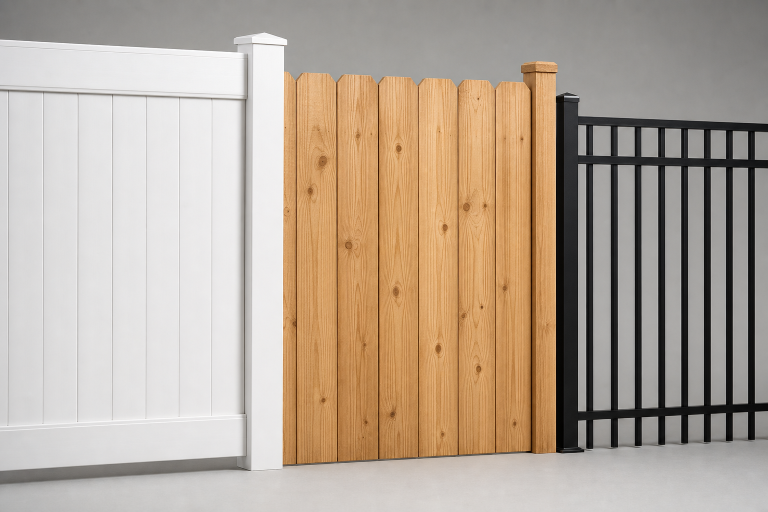
Wood provides a warm, traditional appearance and can create strong visual privacy. It can also be stained or painted to suit the home. The trade-off is maintenance. Boards, fasteners, posts, and finishes need periodic inspection, especially where shade and moisture keep the fence damp.
Vinyl Fencing
Vinyl is a low-maintenance choice for privacy and decorative layouts because it does not need routine staining. It is easy to clean and has a consistent appearance, though major impacts can crack or damage sections. Homeowners should also compare available colors and styles before committing.
Aluminum Fencing
Aluminum offers a clean, open look that works well around pools, front yards, gardens, and landscaped areas. It resists rust and follows slopes more easily than some panel styles, but it does not provide much privacy unless paired with shrubs, trees, or other screening.
Chain-Link Fencing
Chain link is a practical option for pet containment, boundaries, and budget-focused projects. It allows airflow and visibility, and privacy slats or screens can be added when needed. Standard chain link is less suitable when a fully secluded backyard is the main goal.
Plan for Indiana Weather and Soil
Freeze-thaw cycles, heavy rain, snow, saturated ground, and wind can all affect posts, panels, and gates. A fence that performs well on level, well-drained ground may need a different layout or installation method on a sloped, wet, or exposed lot. Look for standing water, preserve drainage paths, and consider whether nearby trees could fall or drop limbs onto the fence during storms.
Post placement and gate design deserve special attention. Gates should have enough clearance to open during mud, snow, or seasonal ground movement. Before any postholes are dug, Indiana homeowners should contact 811 for fence projects and allow time for utility markings and required responses.
Match the Design to Daily Life
For Privacy
- Use solid panels where privacy matters most instead of fencing the entire property the same way.
- Consider nearby windows, decks, traffic, and sight lines from adjacent homes.
- Plan gate placement before finalizing panel sizes and fence transitions.
For Dogs, Children, and Pool Areas
- Match fence height to a dog’s size, jumping ability, and digging habits.
- Check for gaps beneath the fence, especially on uneven ground.
- Choose secure latches and place gates where adults can access them easily.
- Keep furniture, storage boxes, and climbing objects away from safety fences.
- Review applicable local pool and safety requirements before construction.
Check Lines, Easements, and Local Rules
Do not place a boundary fence based only on a visual guess. A survey, recorded plat, or professional site review can help clarify the intended line. Homeowners should also ask about drainage and utility easements, since a fence in the wrong location can create access problems or require removal later.
Rules can vary by municipality, zoning district, lot type, fence height, and proximity to streets or intersections. Check permit requirements, HOA restrictions, material rules, and visibility limits before ordering materials or scheduling work.
Know What a Good Installation Process Includes
- Property review: Walk the yard and identify slopes, trees, drainage issues, access limits, and the project goal.
- Layout planning: Mark corners, fence lines, gates, and any transitions between materials or heights.
- Written estimate: Confirm materials, labor, removal, cleanup, permits, warranty terms, and payment timing.
- Installation: Set posts, install rails or panels, hang gates, and make adjustments for the site.
- Final walkthrough: Test gate movement, inspect alignment and fasteners, and review maintenance needs.
Decide Between Repair and Replacement
Repair may be sensible when damage is limited to a sagging gate, a few boards, or one or two leaning posts, and the rest of the structure remains solid. Replacement may be the better value when multiple posts are loose, rotting, or cracked, storm damage affects several sections, or the old fence no longer meets privacy, pet, or safety needs.
Use a Simple Planning Checklist
- Define the fence’s main purpose.
- Choose a realistic height, layout, and gate location.
- Compare wood, vinyl, aluminum, and chain link based on daily use.
- Review drainage, slopes, trees, and wind exposure.
- Confirm property lines, easements, permits, and HOA requirements.
- Arrange utility locating before digging begins.
- Request a detailed written estimate and ask about maintenance and warranty coverage.
A well-planned fence fits the property rather than forcing the property to fit the fence. By considering weather, access, maintenance, safety, and boundaries from the start, homeowners can choose a solution that looks appropriate and works reliably for years.