Replacing a furnace is more than choosing a new box for the utility room. A successful project considers how the equipment, ductwork, insulation, thermostat, ventilation, and household heating habits work together. Planning before scheduling furnace installation can help reduce surprises, improve comfort, and make quotes easier to compare.
A quick equipment swap may restore heat, but it will not automatically fix cold bedrooms, noisy vents, high utility bills, or weak airflow. Treat the replacement as a whole-home comfort decision, with attention to proper capacity, safe venting, and the details included in the installation scope.
When Repair Makes Sense And When Replacement May Be Better
A repair can be sensible when the problem is isolated, the furnace has been dependable, and replacement parts are readily available. Replacement should be considered when service calls become frequent, repair costs keep rising, rooms heat unevenly, or the unit is nearing the end of its expected service life. Strange odors, soot, combustion concerns, or a suspected cracked heat exchanger require prompt evaluation by a qualified professional.
Do not use a single age-based rule to make the decision. Instead, compare the cost and likely benefit of the repair with the condition of the entire system, including ducts, controls, and venting. A newer furnace may offer improved comfort features, but only if it is selected and installed correctly.
Start With A Home Assessment
Before requesting estimates, gather important information about your furnace, including the model number, fuel type, age, maintenance history, filter size, and any recent repairs. Make note of any rooms that are too warm or too cold, as well as issues like drafts or poor insulation.
Take clear photos of the furnace area, ducts, vent pipes, drain lines, electrical connections, and the thermostat. Check whether the current filter cabinet, thermostat, gas piping, and electrical service are compatible with the proposed system. Having this information will help contractors anticipate any changes in scope before installation.
Additionally, imagine a candid, photorealistic image of a homeowner standing next to an older furnace in their utility room, using a smartphone to photograph the setup, with natural light illuminating the space.
Why Proper Furnace Sizing Matters
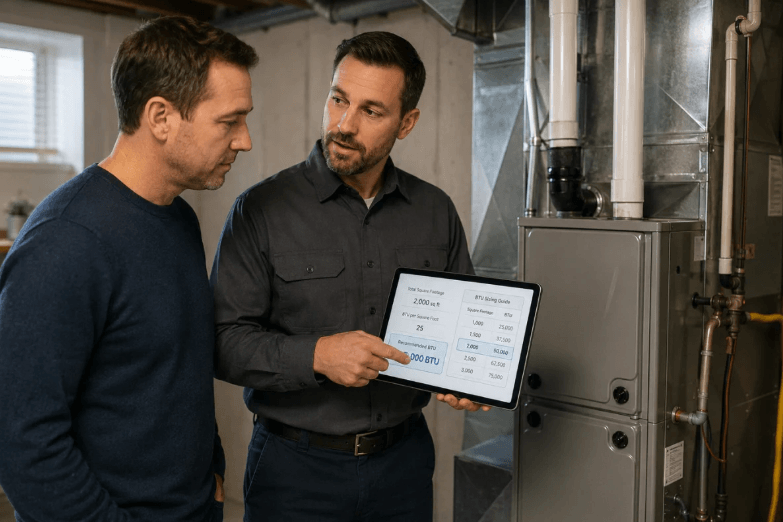
Furnace capacity is commonly described in BTUs, or British thermal units. More capacity is not automatically better. An oversized furnace can heat the thermostat area too quickly, then repeatedly turn on and off. This short cycling can increase wear and create uneven comfort. An undersized furnace may run for long periods and still struggle during colder weather.
Square footage is only one input. Ceiling height, window area, insulation, air leakage, home orientation, climate, layout, and duct condition all affect heating demand. Ask whether the contractor will perform a Manual J load calculation and explain the recommended size in writing. ENERGY STAR similarly advises contractors to verify sizing with Manual J rather than relying on a simple estimate or the old furnace’s label.
Check Ductwork And Airflow Before Installation
A new furnace cannot overcome major duct problems on its own. Loose connections, crushed flex duct, dirty returns, inadequate return-air capacity, and uninsulated ducts in unconditioned spaces can restrict or waste heated air. Warning signs include whistling registers, dusty rooms, weak airflow, hot and cold spots, and rooms that remain uncomfortable even when the furnace runs.
Ask whether the contractor will inspect supply and return ducts, check static pressure, and identify any needed sealing, insulation, resizing, or added returns. If duct changes are recommended, request that they be itemized. This makes it easier to distinguish essential corrections from optional comfort upgrades.
Compare Furnace Types And Efficiency Ratings
Gas and electric furnaces have different operating costs, installation requirements, and local availability considerations. For gas equipment, AFUE measures the percentage of fuel converted to useful heat over a heating season.
Also, compare operating stages. Single-stage models operate at one output level. Two-stage models can run at a lower setting during milder conditions. Variable-speed blower systems may improve air circulation, sound levels, and comfort when paired with suitable controls. The highest efficiency rating is not always the best value, so weigh upfront price, projected fuel use, local climate, repair complexity, and how long you expect to stay in the home.
Review Safety, Venting, And Permit Needs
Furnace replacement involves fuel, combustion, electricity, condensate drainage, airflow, and exhaust. Gas connections, shutoff valves, combustion air, venting routes, and condensate lines should be inspected as part of the project. Never treat gas-line, electrical, or vent modifications as a DIY shortcut.
Confirm who will obtain permits, schedule inspections, and correct code-related issues if they arise. Keep working carbon monoxide alarms on every level of the home and near sleeping areas. At the final walkthrough, learn how to shut off the system safely and what signs should prompt a service call.
Build A Realistic Replacement Budget
Equipment cost is only one part of the total. Labor, removal and disposal, permits, venting changes, drainage work, electrical upgrades, thermostat replacement, access challenges, and duct repairs can materially change the final price. Recent 2026 furnace replacement pricing illustrates why national ranges are only a starting point, not a reliable quote for every home.
Request a written scope that clearly states what is included and what is excluded. Check whether it covers startup testing, permit fees, disposal of old units, warranty registration, and any allowances for unforeseen work. Before relying on incentives, verify current eligibility for utility rebates or tax credits directly through official program information.
See also: Common Corporate Tax Mistakes Small Businesses Make
How To Compare Quotes And Check The Finished Work
- Request more than one detailed written estimate.
- Compare proposed capacity, efficiency, stages, and sizing method.
- Identify duct, venting, electrical, and thermostat work separately.
- Confirm permit responsibility, timeline, labor coverage, and warranty terms.
- After installation, test thermostat modes, check airflow in main rooms, and review filter access.
- Keep copies of permits, manuals, warranty details, and startup records.
Plan For Maintenance And Long-Term Care
Replace filters on a schedule appropriate for the home, especially if there are pets, allergies, or heavy dust. Keep supply and return vents clear of furniture and rugs, and schedule professional service before the main heating season. Track filter changes, repairs, unusual noises, odors, and cycling behavior so small concerns can be addressed before they become larger failures.
Conclusion
A successful furnace replacement requires more than selecting new equipment. Proper sizing, ductwork, ventilation, safety, budgeting, and professional installation all contribute to reliable performance. By comparing detailed estimates, confirming installation requirements, and regularly maintaining the system, homeowners can improve comfort, avoid unnecessary problems, and get lasting value from their investment.