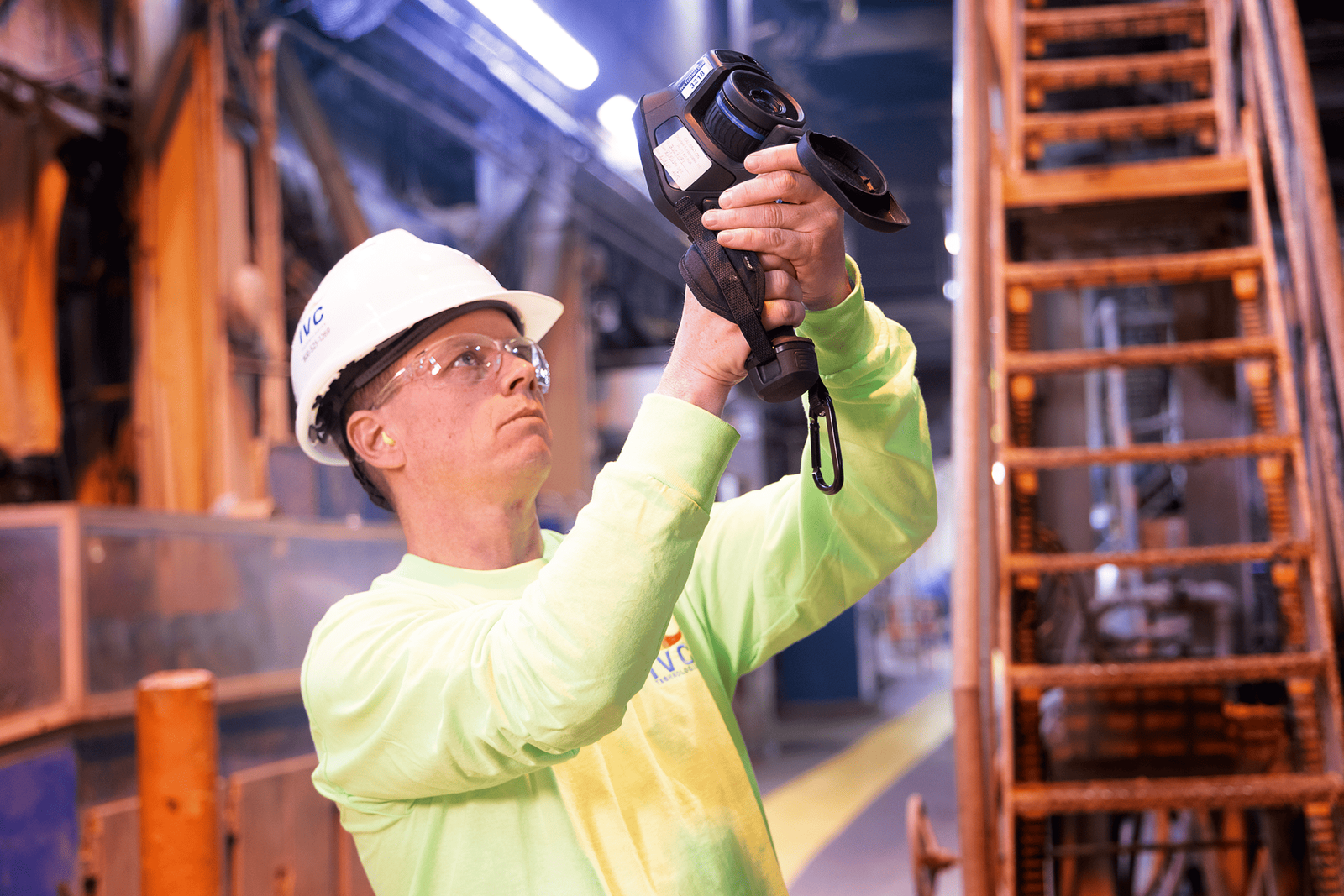
Safety audits are an essential part of maintaining reliable industrial facilities, protecting employees, and preventing equipment-related incidents. Traditional inspections often require technicians to examine components manually, shut down machinery, remove protective covers, or interrupt normal operations to investigate potential problems. While these approaches can be effective, they may also create additional risks, require significant time, and make it difficult to identify problems that are not visible to the human eye. Infrared thermography offers a non-invasive alternative by allowing maintenance and safety professionals to observe temperature patterns across electrical and mechanical equipment without physical contact. Thermal imaging cameras detect infrared radiation and convert temperature variations into visual information that can reveal abnormal heat signatures.
Identifying Hidden Electrical Hazards
Electrical equipment is one of the most valuable areas for infrared thermography during a safety audit. Electrical faults can develop inside panels, switchgear, transformers, circuit breakers, cable connections, and distribution systems without producing obvious visual warning signs. A loose connection, overloaded circuit, damaged component, or unbalanced electrical load can generate localized heat that may gradually increase until it damages insulation or surrounding equipment.
Thermal imaging makes these temperature differences visible, allowing inspectors to identify suspicious areas while systems are operating under normal conditions. This non-contact capability is particularly important because opening or physically handling energized equipment can introduce additional hazards. A thermal camera can help inspectors identify areas that warrant further investigation without requiring immediate physical access to the suspected fault.
Improving Audit Efficiency and Maintenance Planning
One of the major benefits of an infrared thermography inspection is the ability to gather useful information without significantly interrupting normal operations. Traditional safety audits may require equipment shutdowns, physical access, disassembly, or extensive preparation before inspectors can examine particular components. Thermal imaging can often be performed while equipment is operating, enabling organizations to inspect critical assets under realistic working conditions.
This can make safety audits more efficient and reduce the production losses associated with unnecessary shutdowns. Thermal images can also be stored as part of an equipment’s maintenance history, creating a valuable record that can be compared with future inspections. Over time, maintenance teams can establish normal temperature patterns and identify gradual changes that may indicate deterioration. This historical approach allows organizations to move from isolated inspections toward condition-based monitoring.
Inspecting Mechanical Systems Without Disruption
Infrared thermography is also useful for evaluating mechanical equipment that may develop dangerous or costly faults during operation. Motors, bearings, pumps, compressors, gearboxes, fans, and drive systems can generate abnormal levels of heat when they experience excessive friction, poor lubrication, misalignment, overloading, or component deterioration.
A thermal camera can reveal unusual temperature patterns across these systems without requiring technicians to stop the equipment or physically touch moving components. This is particularly useful during safety audits because many mechanical problems only become apparent when machinery is operating under load. Inspectors can compare temperatures between similar components or evaluate changes against established operating baselines to identify areas requiring additional attention.
Enhancing Worker Safety and Risk Management
The non-contact nature of infrared thermography can make safety inspections less intrusive and potentially reduce exposure to certain workplace hazards. Inspectors can assess temperature patterns from a safe position rather than immediately approaching hot surfaces, energized electrical components, or moving machinery. This does not eliminate the need for established electrical and industrial safety procedures, but it can reduce unnecessary physical interaction during the initial assessment.
Thermal imaging can also help safety professionals identify conditions that might otherwise remain unnoticed until they become more severe. Overheating electrical components, excessive friction in rotating machinery, and abnormal heat around bearings or drive systems can all represent early indicators of conditions that deserve attention. Identifying these issues allows organizations to evaluate risk before a failure occurs.
When thermal inspections are documented, compared over time, and integrated with other condition monitoring technologies, they can become an important part of predictive maintenance and risk management programs. Infrared thermography does not replace established safety procedures or professional inspections, but it strengthens them by providing an additional source of objective information. As industrial organizations continue to prioritize worker safety, equipment reliability, and operational efficiency, thermal imaging will remain an increasingly valuable tool for conducting smarter, safer, and more proactive safety audits.