Table of Contents
- Why Daily Routines Matter
- Choosing the Right Skills
- Breaking Tasks into Small Steps
- Using Visual Supports
- Building Functional Communication
- Making Transitions Easier
- Teaching Self-Care and Independence
- Helping Skills Carry Over Across Settings
- Creating a Family-School Team
- Tracking Progress Without Stress
- Common Questions From Families
- Final Thoughts
Daily routines can give children meaningful chances to practice communication, self-care, flexibility, and participation in ways that fit real family life. The goal is not to make every child complete tasks in one “correct” way. It is to create supportive opportunities for building skills, making choices, and taking part in everyday activities.
Parents, teachers, and caregivers can begin with small, useful changes at home, at school, or in the community. Families looking for individualized guidance may also explore www.triangleaba.com as they consider supports that match their child’s strengths, needs, and goals.
Why Daily Routines Matter
Predictable routines can make the day easier to understand. Repeated activities such as getting dressed, eating breakfast, cleaning up, arriving at school, and preparing for bed provide regular practice without turning every moment into a formal lesson. The predictability of daily routines can also help children know what to expect and prepare calmly for changes.
Routines should be adapted to the child, not used to force compliance. A routine can include breaks, sensory tools, communication supports, extra time, or an alternate way to complete a task. Independence goals should be reviewed as the child grows, because skills can develop at different rates.
Choosing the Right Skills
Start with one skill that has a clear purpose. Consider tasks that affect safety, health, communication, participation, or are a stressful part of the day. A broad goal such as “be more independent” is difficult to teach and measure. A clearer goal is, “Put dirty clothes in the hamper after changing.”
Choose goals with the child’s preferences, motor abilities, sensory needs, and communication style in mind. Ask one practical question: what small change would make this routine easier or more comfortable for the child and family?
Breaking Tasks into Small Steps
Large routines can feel overwhelming when they are taught all at once. Break the task into a short sequence, sometimes called task analysis. For toothbrushing, the steps might include getting the toothbrush, adding toothpaste, brushing, rinsing, and putting materials away.
- Write the steps in the order they usually happen.
- Identify what the child already does successfully.
- Teach one new step at a time.
- Offer only as much help as needed.
- Reduce prompts gradually when the child is ready.
Progress may mean completing more steps, using fewer reminders, waiting briefly, or asking for help before frustration builds.
Using Visual Supports
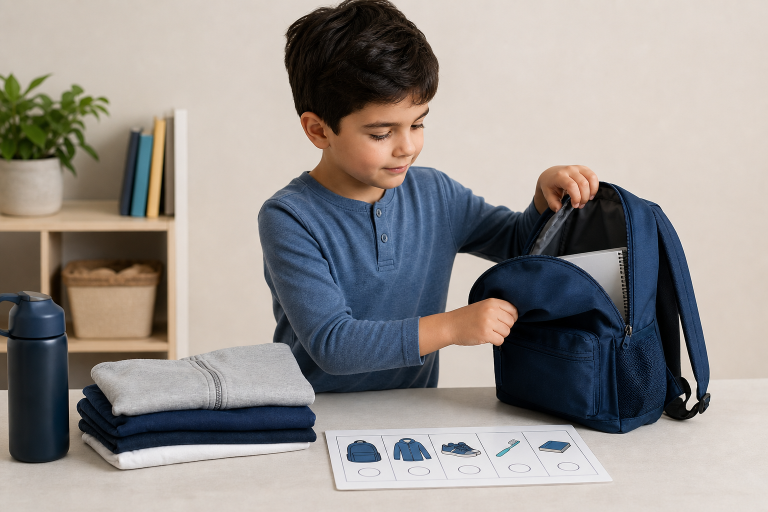
Pictures, written checklists, objects, and simple timers can make expectations easier to see. Place the support where the activity happens, keep it uncluttered, and use the format that makes the most sense to the child. Photographs may be useful for concrete routines, while words or icons may work well as reading skills grow.
Sample Morning Schedule
- Get dressed.
- Eat breakfast.
- Brush teeth.
- Pack the backpack.
- Put on shoes.
- Leave for school.
Building Functional Communication
Communication support should help a child express needs, preferences, feelings, and boundaries throughout the day. Functional communication can include speech, gestures, signs, pictures, communication boards, or a speech-generating device. Spoken language is only one valid way to communicate.
- Requesting help or a break.
- Choosing between available activities.
- Rejecting an item or activity safely.
- Sharing an interest with another person.
- Responding to familiar safety directions.
Making Transitions Easier
Changes between activities, people, and locations can be challenging. Give a short warning, use a timer or visual countdown, and show what happens next. When possible, offer two acceptable choices, such as walking to the car or hopping to the car.
For example, before leaving a playground, an adult might say, “Two more minutes, then shoes,” while showing pictures of shoes and a car. Small planned changes can also be practiced during calm moments, so flexibility develops without unnecessary pressure.
Teaching Self-Care and Independence
Self-care goals may include handwashing, dressing, eating, cleaning up, toileting, packing school materials, and using basic safety routines. Independence does not always mean doing every part alone. It can mean starting a task, making a choice, using a checklist, or knowing how to request assistance.
Everyday responsibilities such as putting away toys or placing clothes in a basket can help children participate in family life. Age-appropriate opportunities to help with ordinary tasks can also support growing confidence and responsibility.
Helping Skills Carry Over Across Settings
A child may use a skill at home but not at school, or use it with one adult but not another. Differences in noise, materials, instructions, timing, and expectations can affect performance. Help skills carry over by using similar words, consistent visual supports, real materials, and practice with more than one trusted adult.
Move gradually from quiet practice to busier settings. Share successful prompts and calming strategies with teachers, relatives, and caregivers so the child receives familiar support across environments.
Creating a Strong Family-School Team
A simple communication system can help adults focus on the same priorities. Choose two or three goals, agree on brief prompt language, and share what is working. A one-page support summary can include strengths, interests, preferred communication methods, signs of stress, helpful supports, safety information, and current goals.
Tracking Progress Without Stress
Brief notes can reveal useful patterns without making family life feel like a full-time data project. Record the date, the task, the amount of help provided, and a short note about what made the routine easier or harder.
- Independent
- Completed with a reminder
- Completed with physical or direct help
- Not ready or not completed today
Review the notes every few weeks. Data is a decision-making tool, not a scorecard for the child or family.
Common Questions From Families
How long does a new routine take to learn?
There is no fixed timeline. Progress depends on the task, opportunities for practice, communication needs, sensory factors, and the kind of support available. Look for small, meaningful changes over time.
What if a child refuses a task?
Consider fatigue, pain, sensory discomfort, unclear directions, or a task that is too difficult. Check the environment and simplify the routine before increasing expectations. Seek qualified professional support when a concern affects health, safety, communication, school access, or family well-being.
Should routines always stay the same?
Consistency can be helpful, but flexibility matters too. Keep most of the routine familiar while introducing small planned changes when the child is calm and supported.
Final Thoughts
Independence grows through useful practice, respectful support, and shared expectations. Small routines can strengthen communication, confidence, safety, and participation. The most effective plan is one that fits the child, works for the family, and can be used in the real moments of daily life.